Clissold Park has a history stretching back centuries, and we believe understanding and preserving that history is part of caring for the park today.
CPUG researches, shares and helps preserve the park’s heritage. Over the years, our work has included restoring a memorial to the campaigners who saved Clissold Park from development, helping commemorate one of the park’s founders beyond its gates, organising heritage talks and displays, and using historical images to share the park’s history and raise funds for the group.
Our Park History Representative is local historian Amir Dotan, whose independent research into Clissold Park and Stoke Newington also helps inform the history we share through CPUG’s website, newsletter, social channels and activities.
Restoring the Beck and Runtz Memorial Fountain
One of the most important monuments to the creation of Clissold Park stands close to Clissold House.
The memorial drinking fountain commemorates Joseph Beck and John Runtz, two of the central figures in the campaign that secured the estate as a public park. The fountain was erected in 1890, a year after the park opened, and was funded by donations from local residents.
At its top was a decorative metal orb which was subsequently lost. As part of CPUG’s celebrations marking the 125th anniversary of Clissold Park in 2014, the group helped restore the fountain and reinstate the missing orb.
The restored fountain was unveiled on 24 July 2014, exactly 125 years to the day after Clissold Park opened to the public.
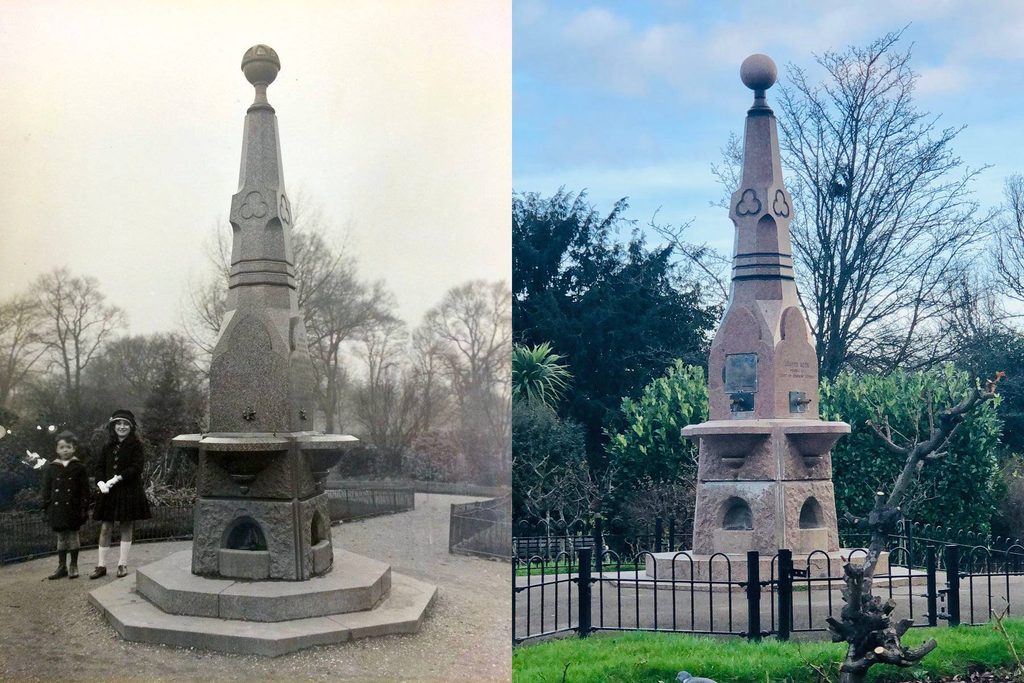
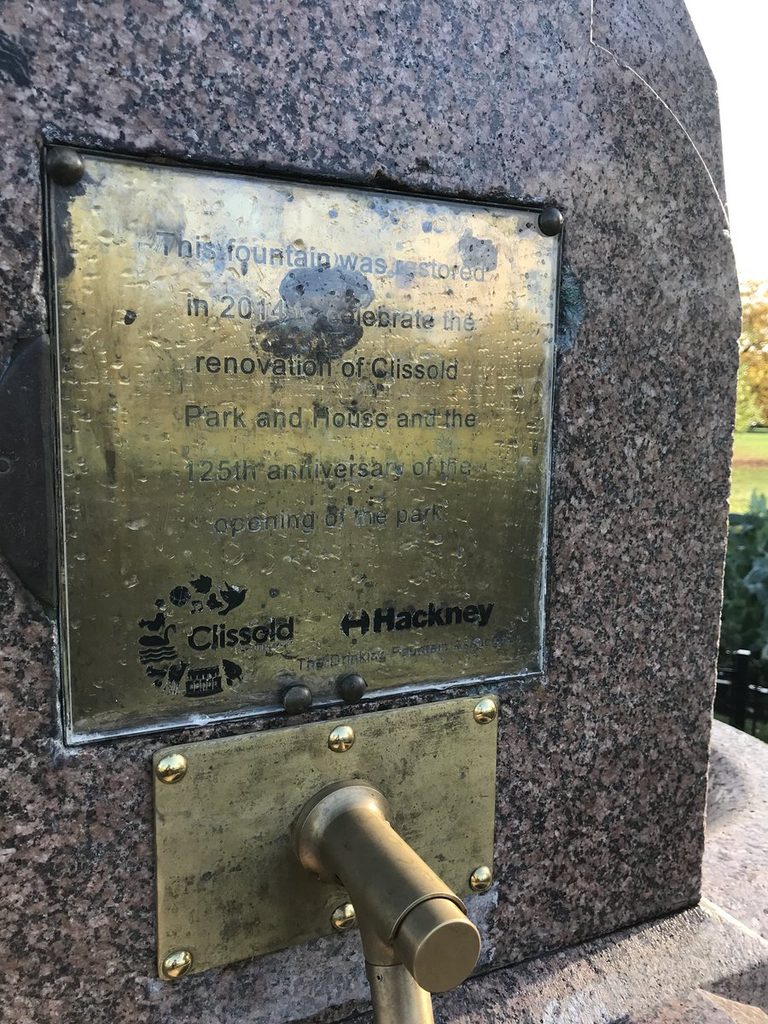
The unveiling was carried out by Joseph Beck’s great-great-great-grandchildren, with three generations of his family attending the celebration. Local poet John Hegley also joined the event and composed a poem for the occasion.
The anniversary celebrations provided an opportunity to recreate images from the park’s past. CPUG restaged two historical photographs: the gathering on the lawn outside Clissold House on the park’s opening day in 1889, and an early twentieth-century postcard showing people gathered around the Beck and Runtz fountain.
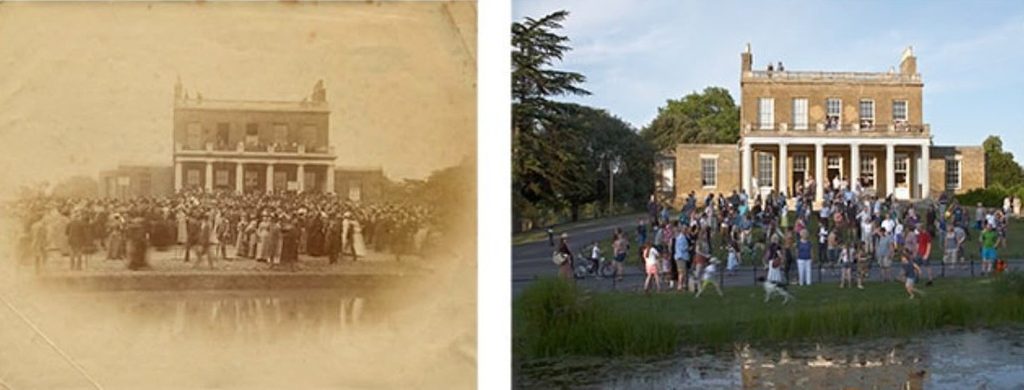
By recreating the photographs in the same locations 125 years later, the project brought together the people celebrating Clissold Park in 2014 with images of earlier generations enjoying the same park.
Talks, displays and sharing the park’s history
Heritage activities have also provided opportunities for people to discover the history of Clissold Park.
In 2015 CPUG hosted a sold-out talk by Ken Worpole and welcomed hundreds of visitors to historical displays during Open House.
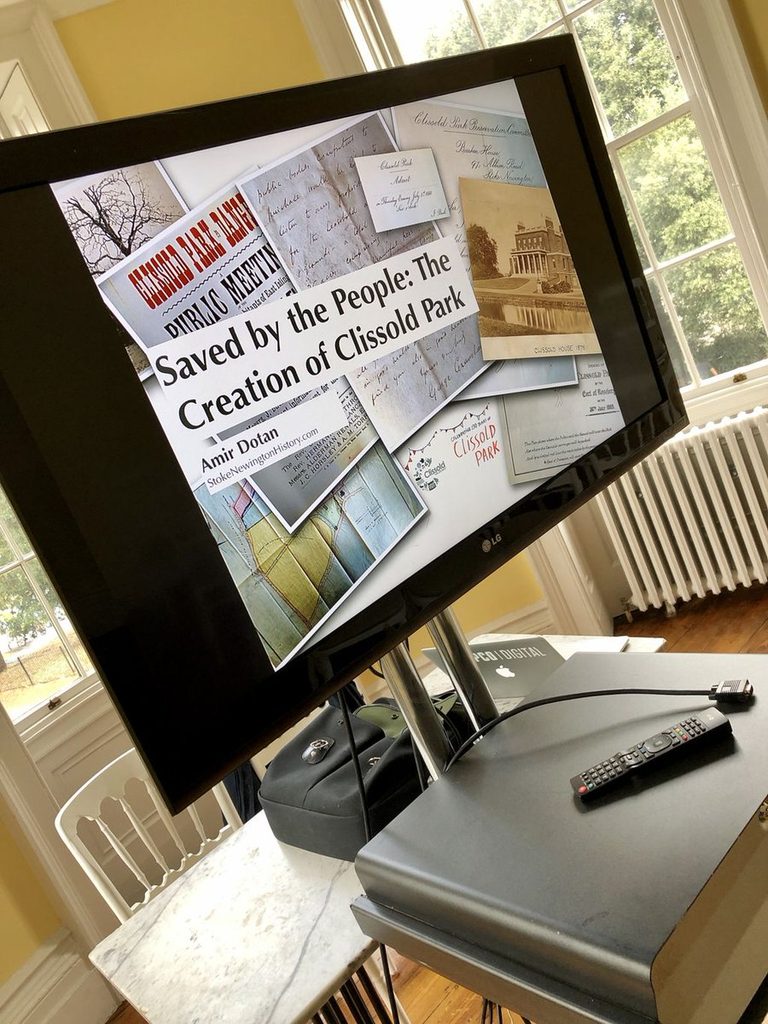
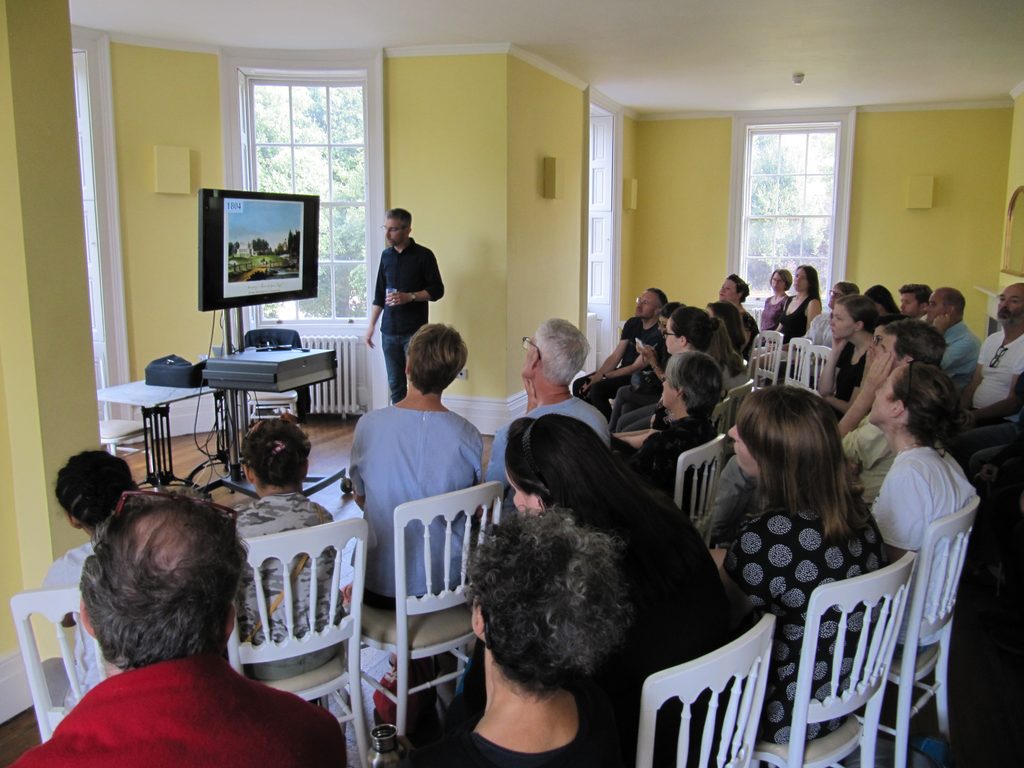
In September 2016, Amir Dotan gave talks about the campaign that saved Clissold Park from development in the 1880s, drawing on his research into the archive of Joseph Beck, who chaired the campaign. CPUG volunteers also led heritage tours during Open House, with the group reporting around 250 participants. The talk returned to Clissold House during Open House in September 2019, giving another audience the opportunity to discover the story of the campaign and see material from the surviving archive.
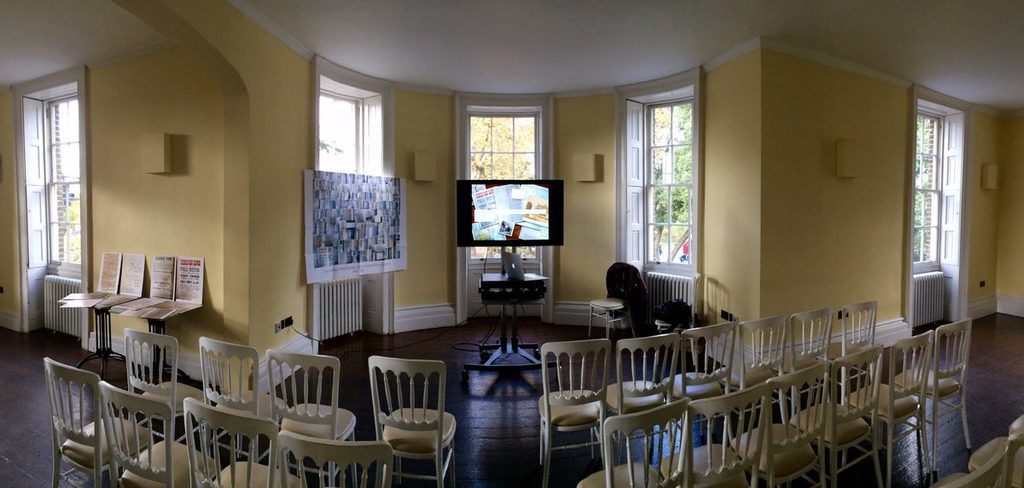
Historical displays and other activities have continued to provide ways of sharing the park’s history with visitors and connecting the places people see today with the events and people that shaped them.
Commemorating Joseph Beck on Albion Road
Joseph Beck lived close to Clissold Park at 9 Albion Road. From there he became one of the driving forces behind the campaign to prevent the Clissold estate from being developed and secure it for public use.
The house no longer survives. Barton House GP Practice now occupies the site.
In 2017, Amir Dotan began a project to commemorate Beck at the place where he had lived. Working with Barton House, Hackney Council, CPUG and descendants of Beck, the project resulted in a heritage plaque being installed on the site.
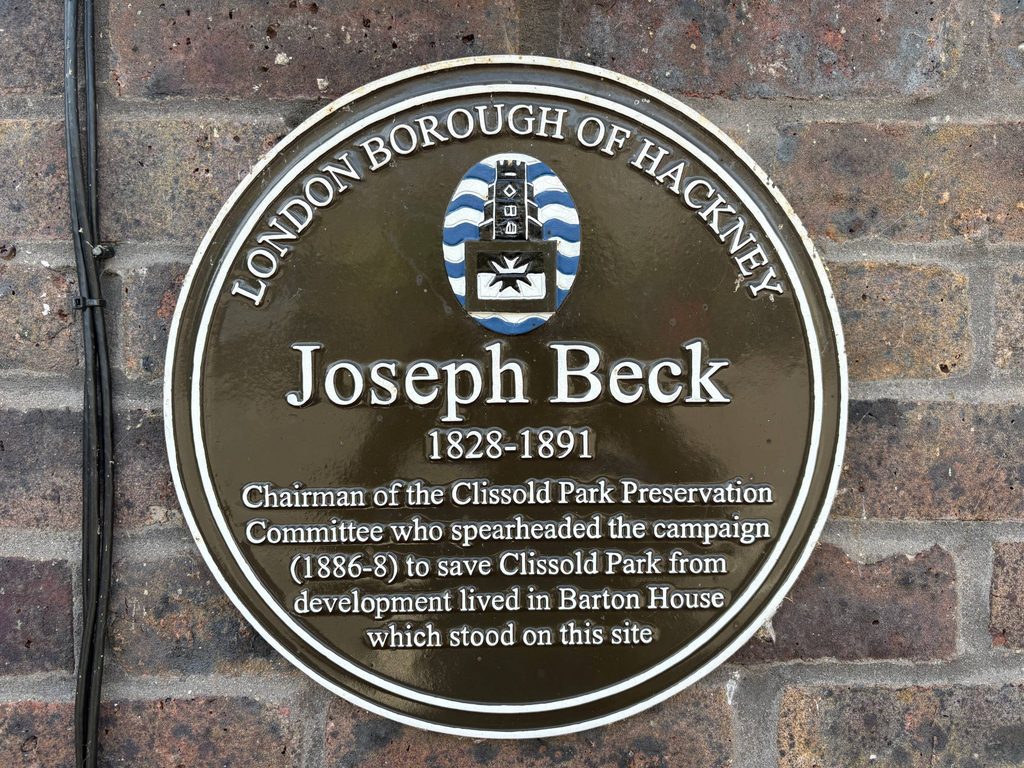
CPUG and members of Beck’s family contributed towards the cost of the plaque.
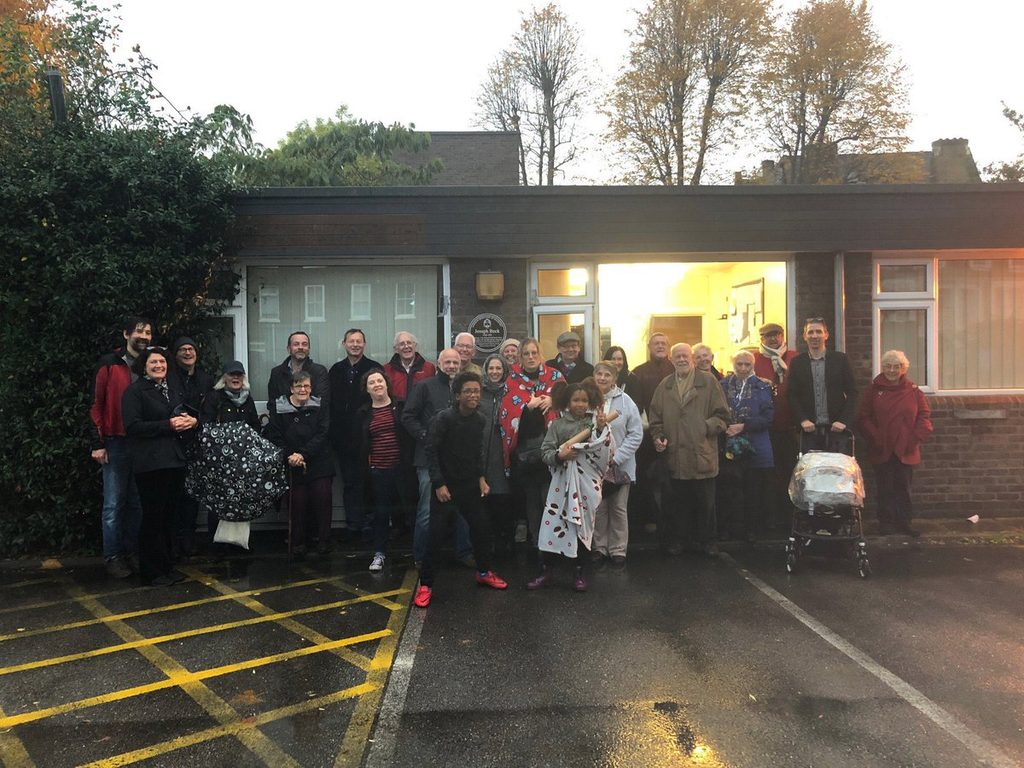
It was unveiled on 10 November 2018 at an event attended by members of the Beck and Runtz families. Their descendants met there for the first time in nearly 130 years.
The plaque extends the story of Clissold Park beyond the park gates and marks the connection between the campaign and the surrounding neighbourhood in which many of the people responsible for saving the park lived.
Bringing historical images back into the park
Historical photographs and postcards provide a record of how Clissold Park has changed and how generations of local people have used it.
CPUG has reproduced historical postcards of Clissold Park for sale in the park café, with proceeds helping to raise funds for the group.
Amir worked on reproducing the postcards using historical images of the park, bringing views from its past back into the place where many of them were originally photographed.
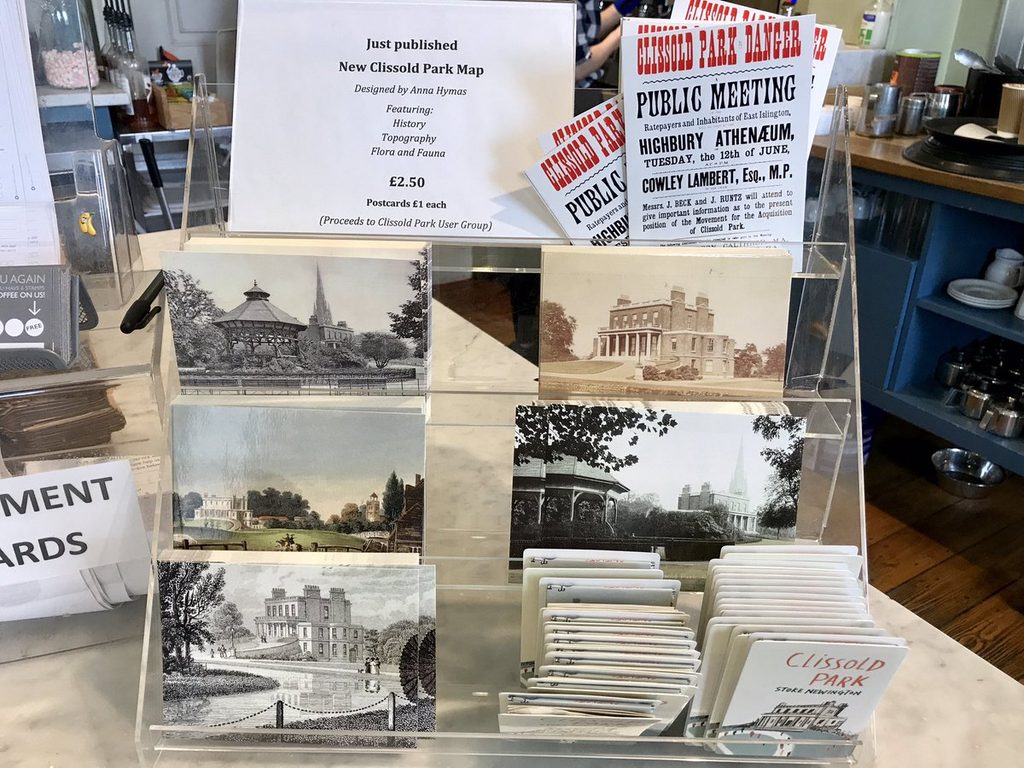
Historical images also played a part in CPUG’s celebrations of the park’s 125th anniversary in 2014. Two photographs were recreated: a group portrait taken on the lawn in front of Clissold House on the park’s opening day in 1889, and an early twentieth-century postcard showing people gathered around the Beck and Runtz fountain.
The recreated photographs connected people using the park in the present with those who had stood in the same places generations earlier.
[Explore historical images of Clissold Park]
Researching and sharing the park’s history
Our heritage work also involves researching and communicating the stories behind Clissold Park.
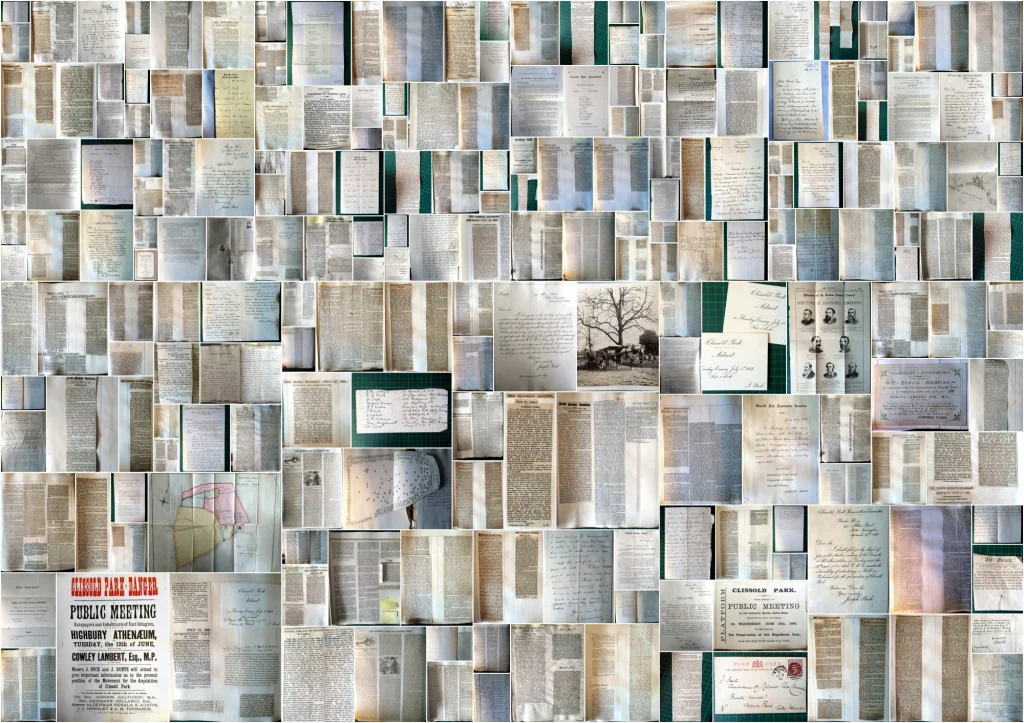
Amir’s independent research has included gaining access to a collection of around 175 documents preserved by Joseph Beck’s family and creating the Clissold Park Campaign Archive so the material could be explored online.
In 2021, he also photographed the 412-page petition used during the 1886 campaign to save the park and organised 40 volunteers to transcribe its approximately 11,000 names and addresses. The project made it possible to search the names of the local people who supported the campaign.
These were independent research projects rather than CPUG projects, but having a Park History Representative actively researching the history of Clissold Park helps us bring new research into the group’s work and share it with park users through our website, newsletter, social channels and other activities.
A continuing part of our work
The history of Clissold Park is not separate from its future. Understanding how the park was created, how it has changed and the people who have cared for it helps explain why its heritage matters today.
CPUG’s heritage work has taken different forms over the years, from restoring and commemorating physical features to talks, displays, historical images and research.
We will continue to research, share and, where opportunities arise, help preserve and commemorate the history of Clissold Park.