The restoration of Clissold Park and Clissold House was one of the largest changes to the park in its modern history. Major restoration works began in 2010 and were largely completed during 2011, with the restored Clissold House reopening to the public in January 2012. The £8.9 million project was the culmination of more than two decades of concern, campaigning, consultation, planning and repeated attempts to secure the investment needed to restore the historic house and park.
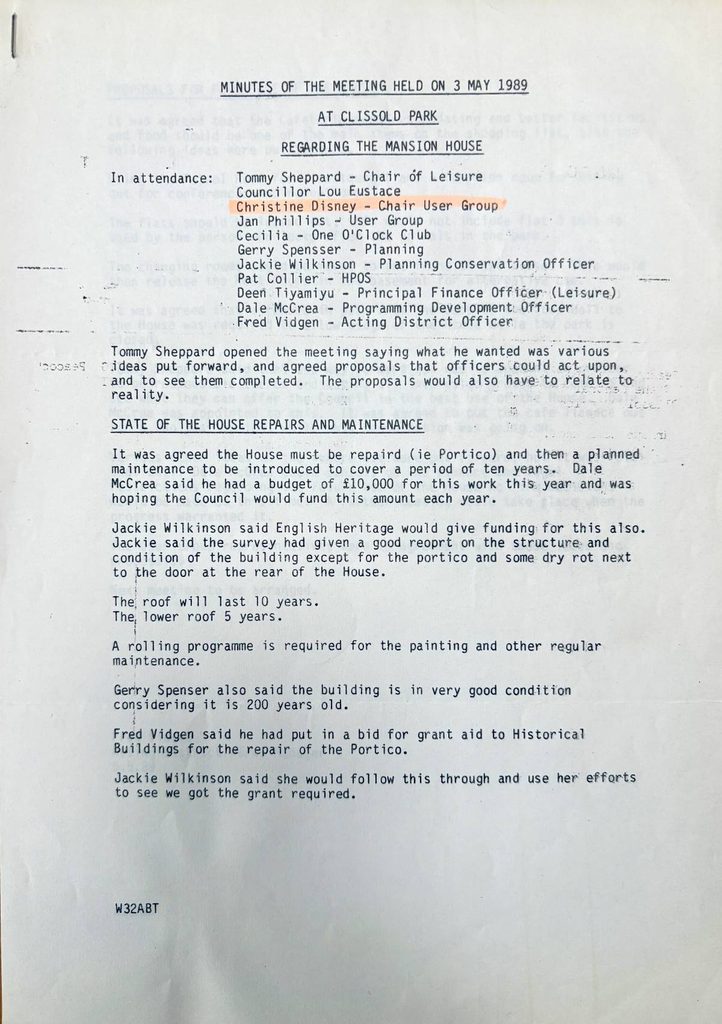
Clissold Park User Group played an important part in that long process. Surviving records show the group discussing the future of Clissold House with Hackney Council as early as May 1989, the centenary year of Clissold Park’s opening. In autumn 1993, the Friends of Clissold House was formed to focus specifically on the future of the building and subsequently operated as a CPUG subgroup. A separate Clissold House Trust was established in 1996. During the 1990s, these organisations and the local volunteers involved with them explored possible uses for the House, promoted public consultation, contributed to feasibility work and pursued ways of securing the investment needed for its restoration.
This account draws extensively on surviving CPUG, Friends of Clissold House and Clissold House Trust records from the 1990s and 2000s, including meeting minutes, correspondence, newsletters, reports and consultation material. Together they provide a detailed contemporary record of a campaign that evolved over many years. The account also draws on Hackney Council and Lottery material and first-hand recollections from people involved.
The eventual restoration project was led by Hackney Council and funded by the Council, the Heritage Lottery Fund and Big Lottery Fund. Its success was the result of a partnership involving the Council, Lottery funders, local organisations, park users and others over many years.
On this page
- A house and park in decline
- The campaign to save Clissold House
- Searching for a future for Clissold House
- The first Lottery bids
- The people behind the campaign
- Developing a restoration plan
- From campaigning to a funded project
- Shaping the plans with park users
- Supporting the final bid
- Preparing for the restoration works
- Work begins
- Restoring Clissold House
- Restoring and improving the park
- A new approach to managing the park and House
- Clissold House reopens
- The work continued after reopening
- A restoration with a lasting legacy
A house and park in decline
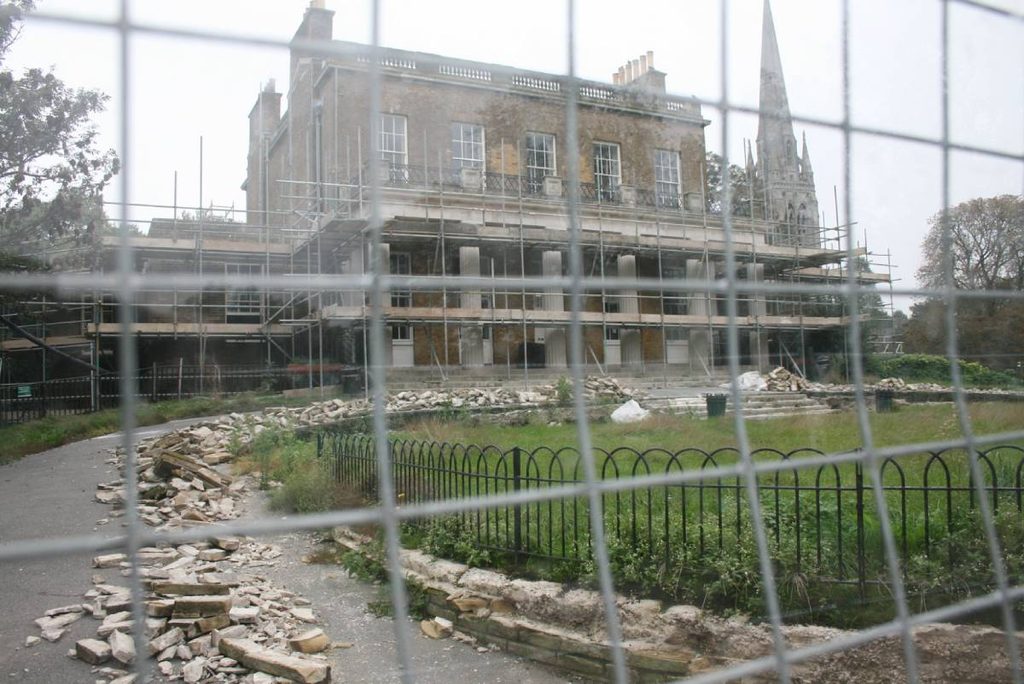
Clissold House was built in the late eighteenth century as a private country villa and became part of the public park when Clissold Park opened in 1889. It is Grade II* listed, while Clissold Park itself is Grade II on the Register of Parks and Gardens of Special Historic Interest.
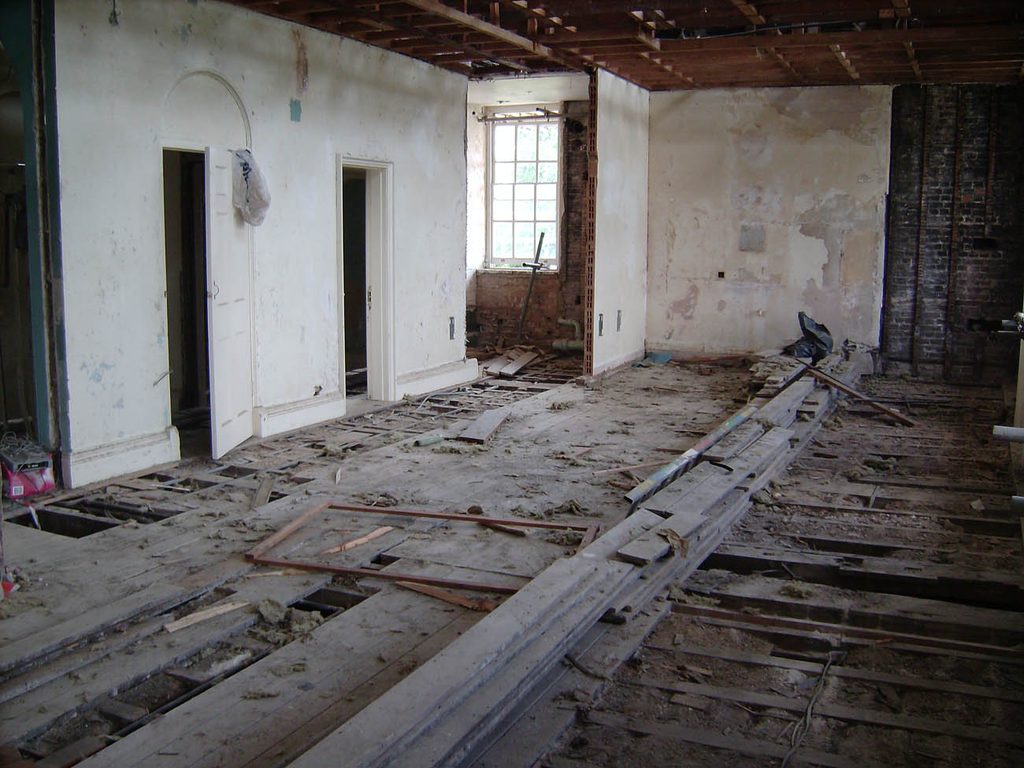
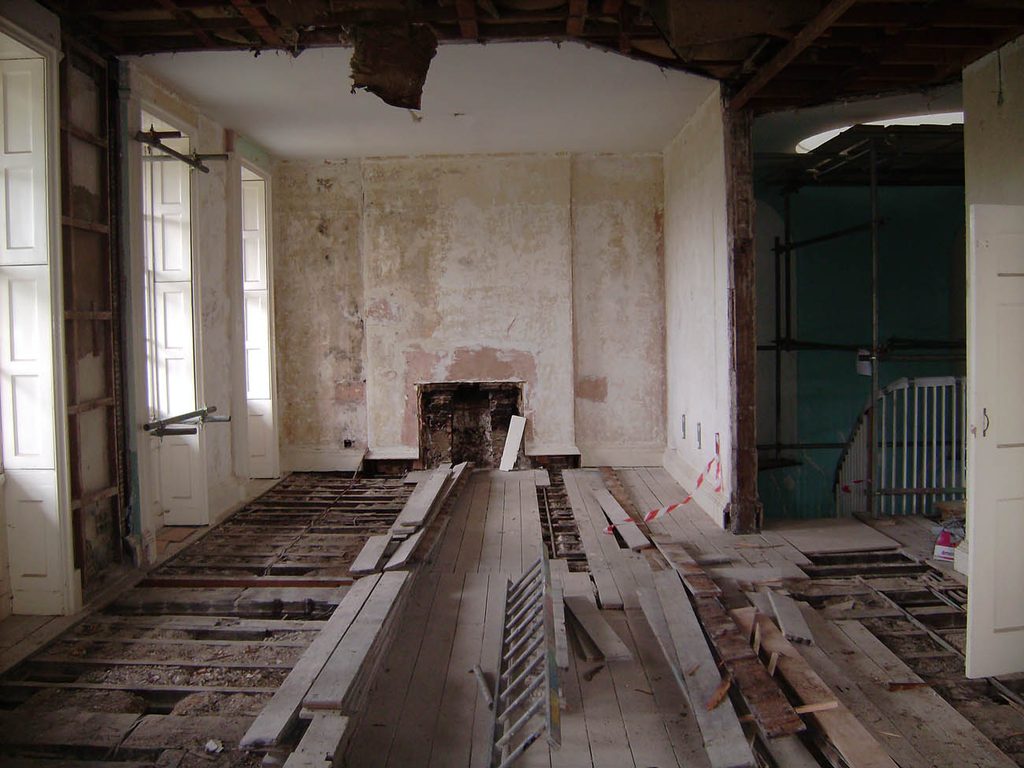
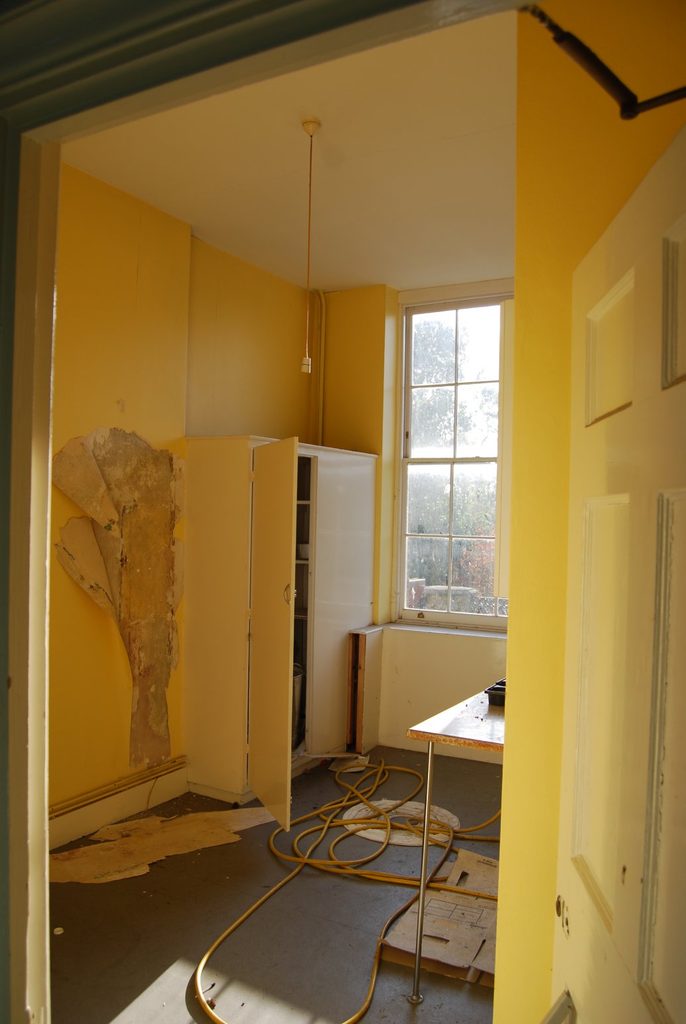
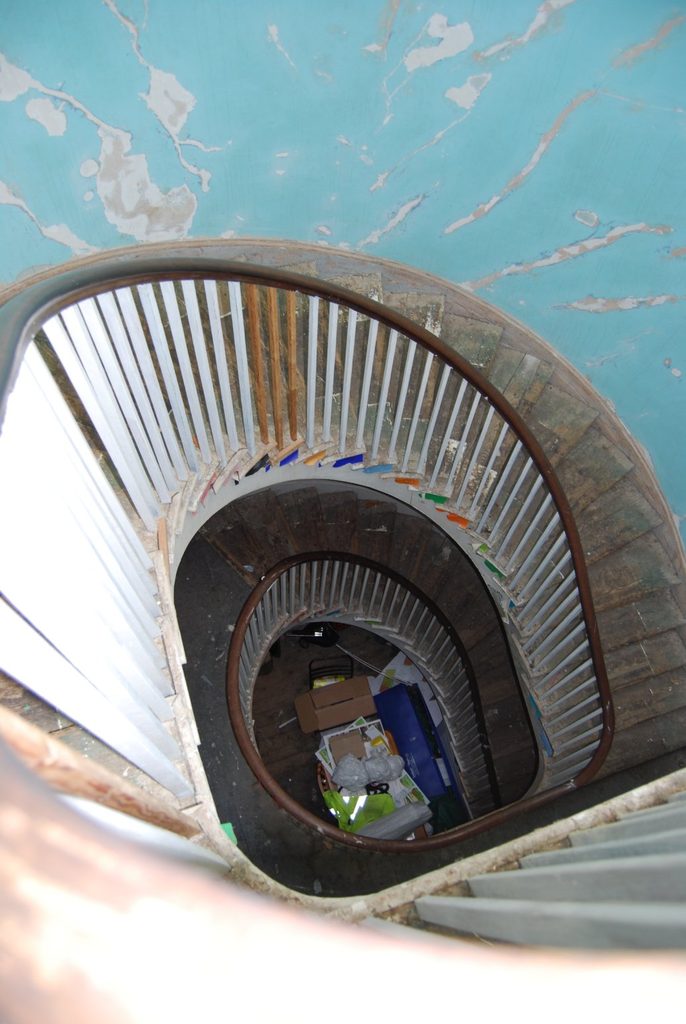
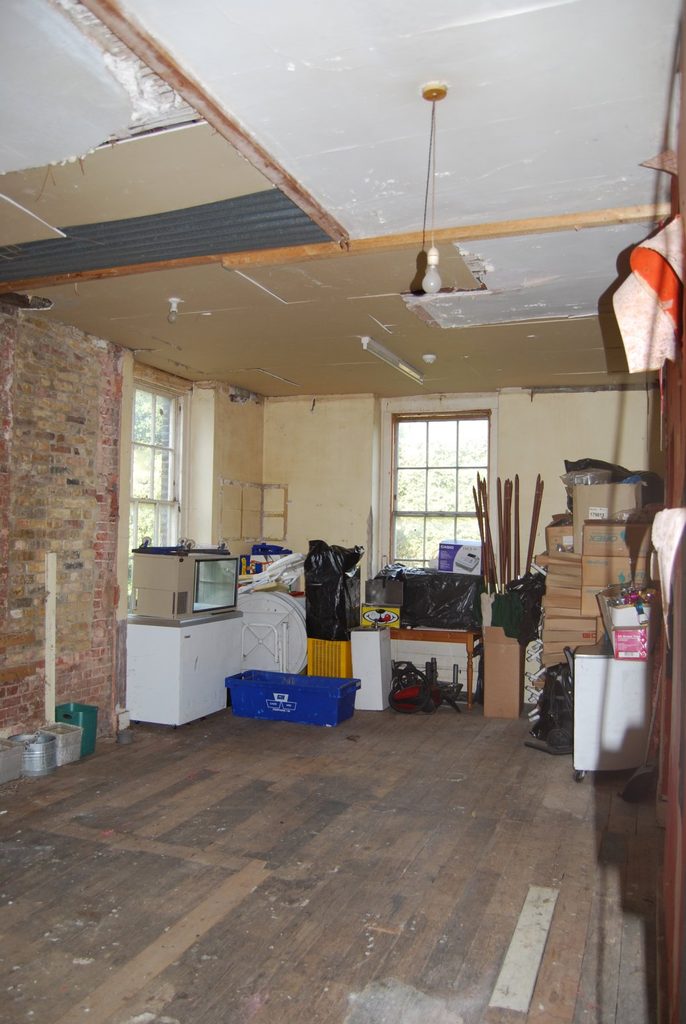
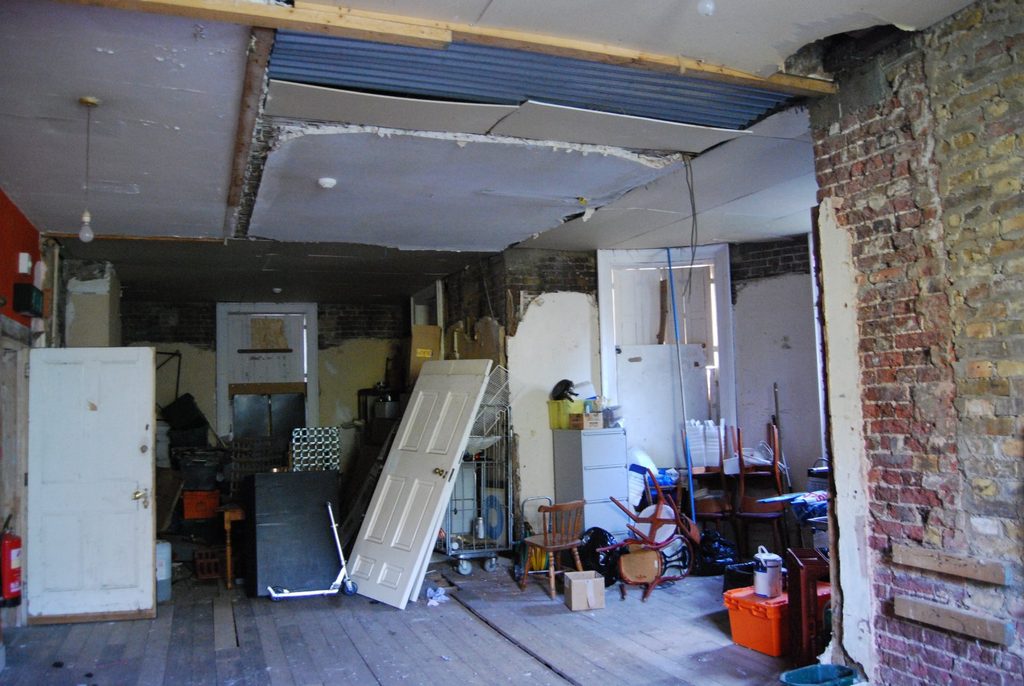
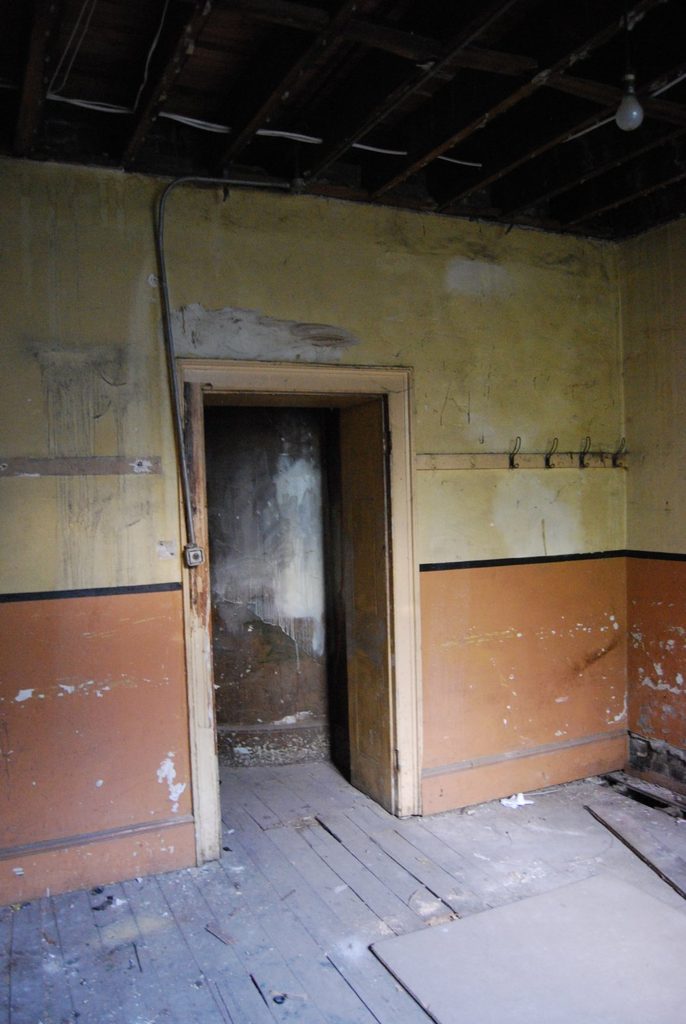
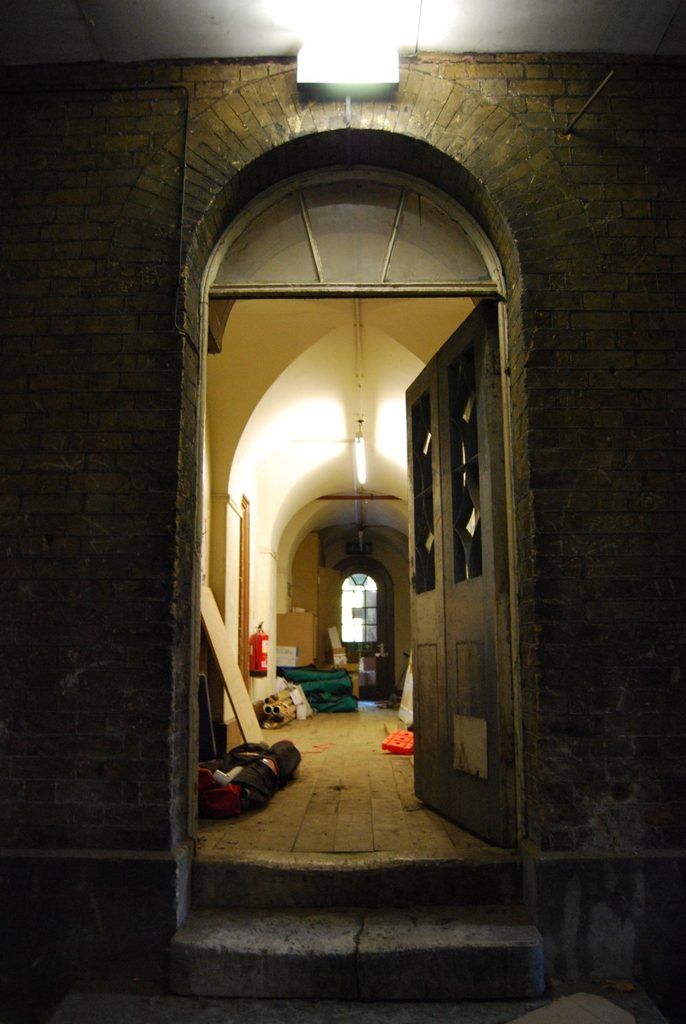
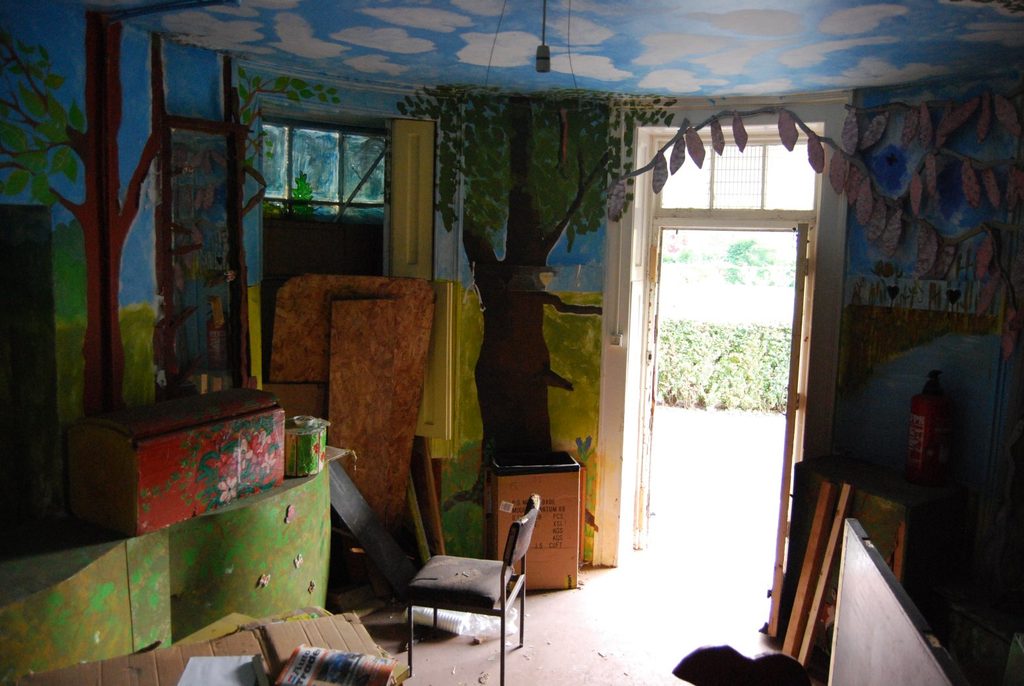
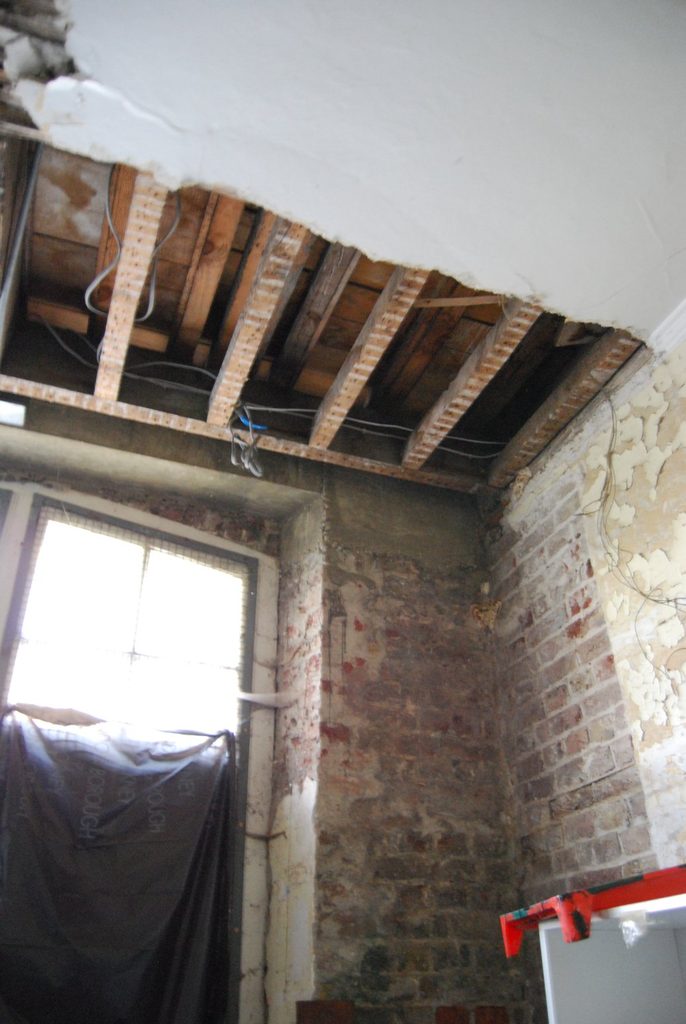
By the 1980s and 1990s, the House needed repair and investment, but it was not an abandoned building. Parts remained in active use as residential accommodation, offices, staff space and storage, alongside the café.
Caroline Richards, who worked as a park keeper at Clissold Park, looking after the park’s animals and lived in Clissold House from 1986 until 1999, remembers a building that was still very much occupied. She recalls concerns about both its condition and the way some areas were being managed and used by certain park staff. These included extensive storage in parts of the House, including lower areas affectionately known to staff as “the dungeons”, as well as practices that concerned her as a tenant.
Caroline also remembers frustration among some members of CPUG about the way parts of the House were being used and cared for. She recalls a feeling that the building was not always being treated with the care it required, and some friction between members of the User Group and certain park staff.
Alongside concerns about its physical condition, Caroline remembers a strong feeling within CPUG that more of the building should serve the park and local community rather than continuing to function as staff space and storage.
Caroline’s recollections provide a first-hand perspective on this period. The surviving documentary record independently shows that by May 1989 CPUG representatives were discussing repairs, maintenance and possible future uses for Clissold House with Hackney Council.
The seriousness of the building’s condition was formally recognised in 1991, when Clissold House was added to English Heritage’s Buildings at Risk Register.
Saving the House, repairing its historic fabric and finding a sustainable public use for it would become a long-running local concern.
The campaign to save Clissold House
By the early 1990s, securing the future of Clissold House had become an important concern for CPUG and other local campaigners.
In autumn 1993, the Friends of Clissold House was formed to focus specifically on the future of the building. One of its early aims was to explore whether a charitable trust could provide a way of raising the substantial funds needed for refurbishment. The Friends subsequently operated as a subgroup of CPUG.
The campaign was about more than repairing a deteriorating historic building. The Friends wanted Clissold House to have a sustainable future and to become a more active part of the public park. This reflected a concern already present among some User Group members that more of the House should serve park users and the wider community. By the mid-1990s their aims included maintaining the House, increasing public enjoyment of it, providing an affordable year-round café and making the building the “heart of the park”.
Much of the work was carried out by volunteers. Members researched comparable projects, developed ideas for possible uses of the House, considered different ways it might be managed and sought information about potential sources of funding.
They also pressed for park users and the wider community to have a meaningful role in deciding what happened to the House. During 1994 and 1995, the Friends sought involvement in defining the brief for the emerging feasibility study and called for consultation through public meetings, exhibitions, questionnaires and opportunities for people to visit the building.
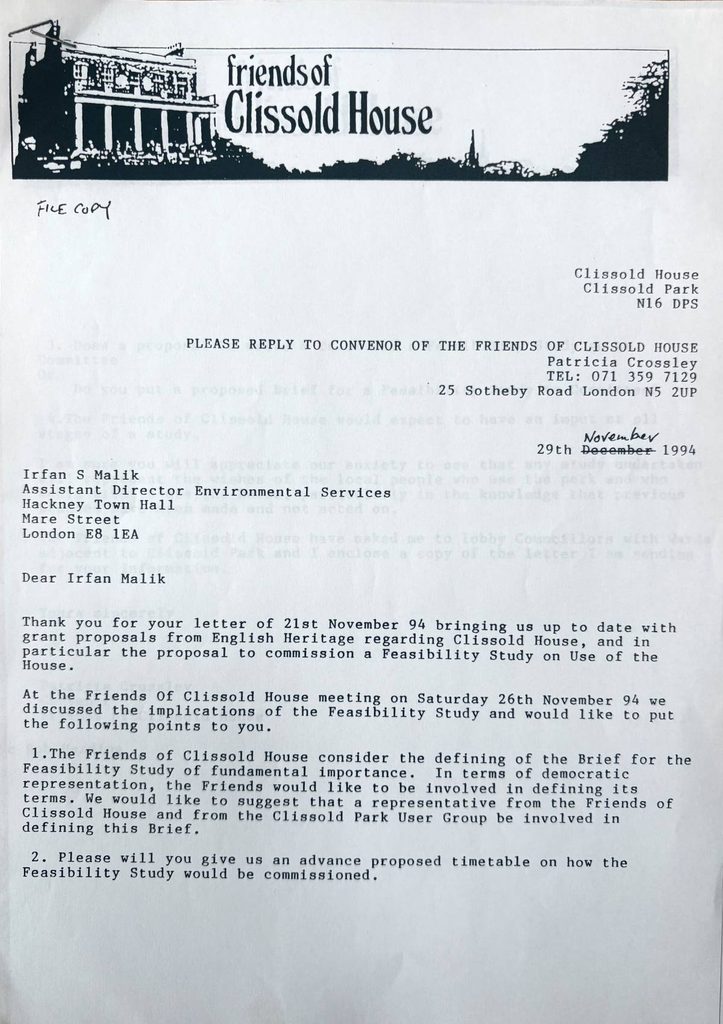
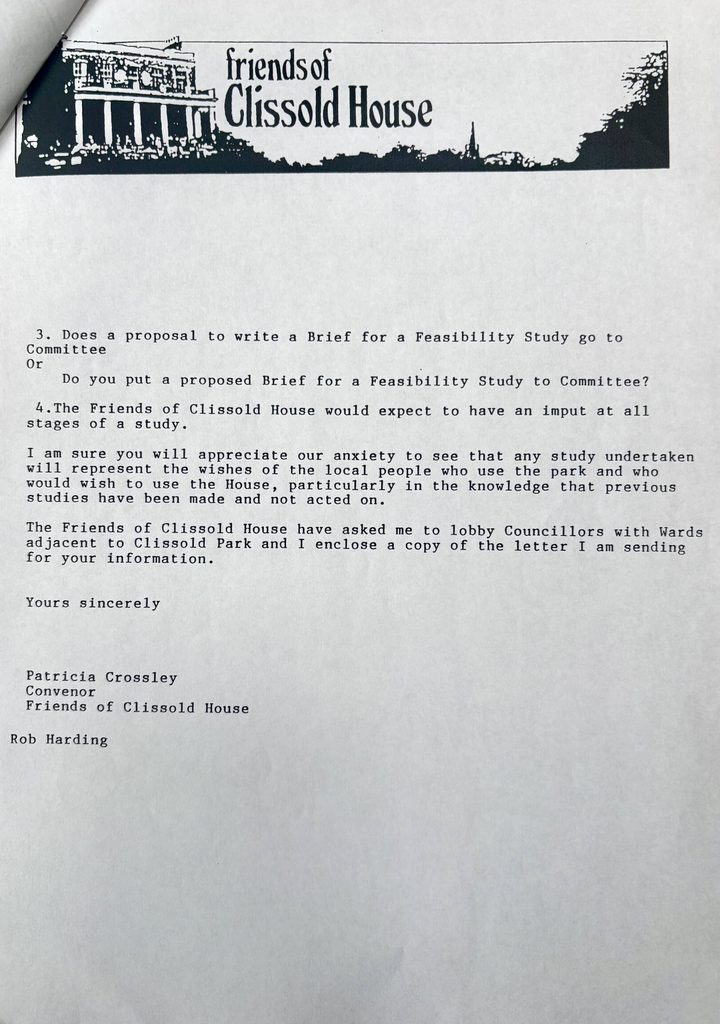
The surviving records show that the campaigners themselves were conscious of the need for wider public involvement rather than assuming that a relatively small group of volunteers could speak for everyone. Questions about consultation, representation and how local people could influence the proposals would recur throughout the long restoration campaign.
These efforts marked the beginning of a more organised attempt to establish what Clissold House could become, how its restoration might be funded and how it could be managed in the future.
Searching for a future for Clissold House
By 1995, the campaign was moving beyond calls to save Clissold House towards the more complicated question of what a restored building should be used for and how it could be sustained in the long term.
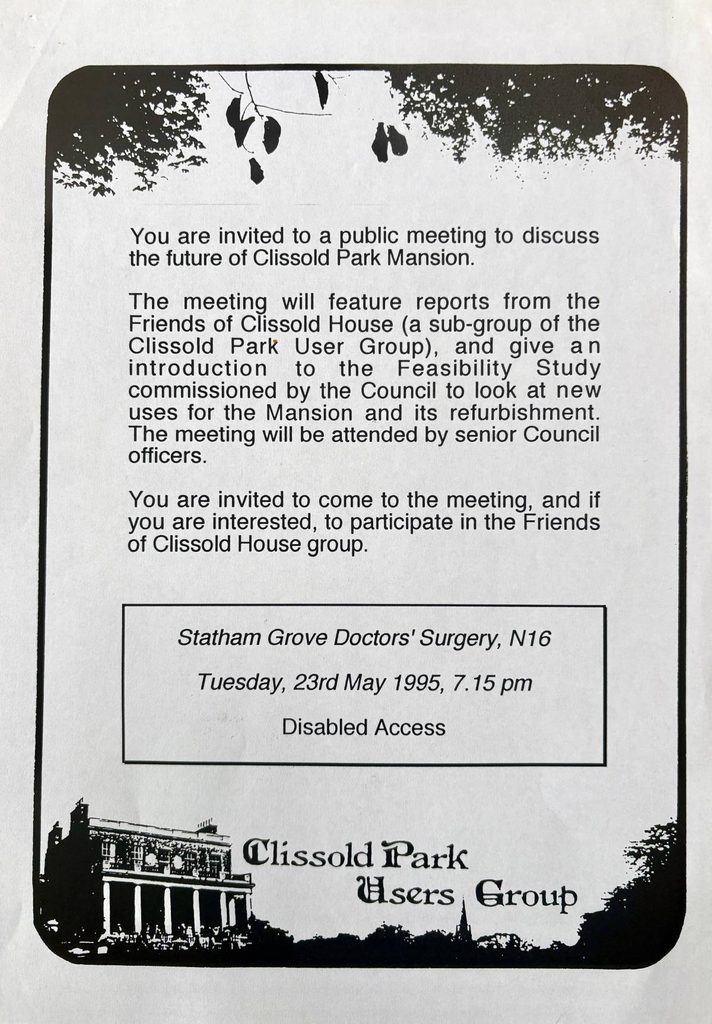
Hackney Council and English Heritage provided £10,000 towards a feasibility study. The Friends of Clissold House and CPUG sought an active role in the process, contributing ideas and continuing to press for public involvement in decisions about the building.
Consultation included meetings, workshops and discussion of a wide range of possible uses. Proposals combined community and public activities with uses capable of generating income. Ideas included an affordable café, rooms for celebrations and events, an information centre, facilities connected with activities in the park, provision for older park users and an education centre incorporating displays about the history of the House and park.
A feasibility study by URBED, completed in November 1995, recommended a mixture of community and income-generating uses and the creation of a development trust, alongside continuing support from Hackney Council. The preferred scheme was estimated to require around £880,000 in capital expenditure, including professional fees but excluding VAT.
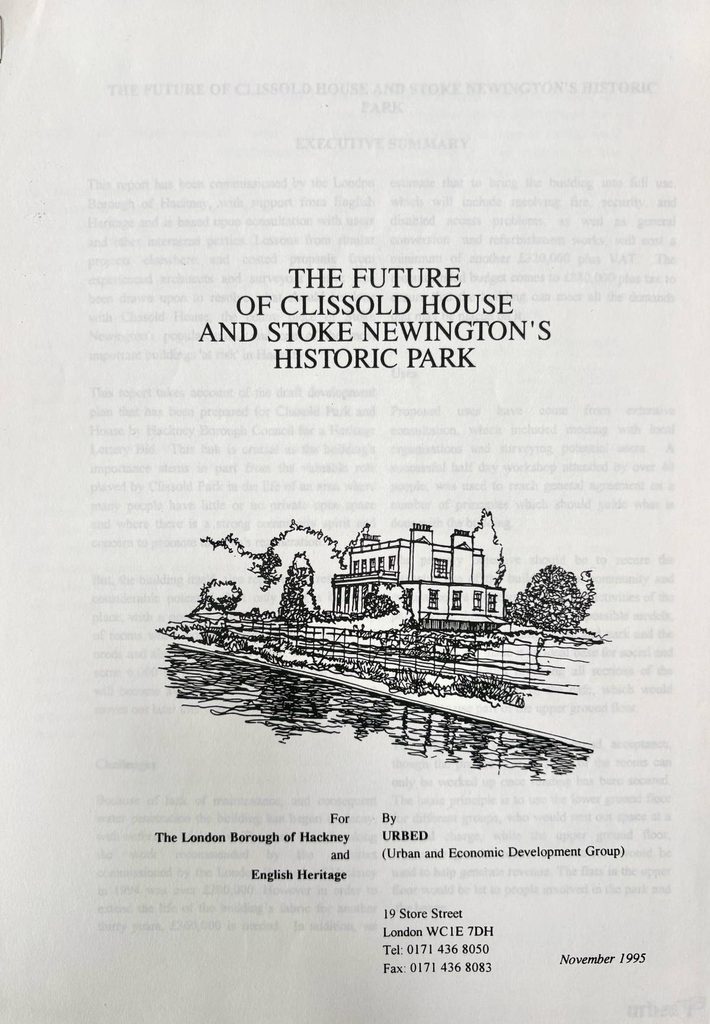
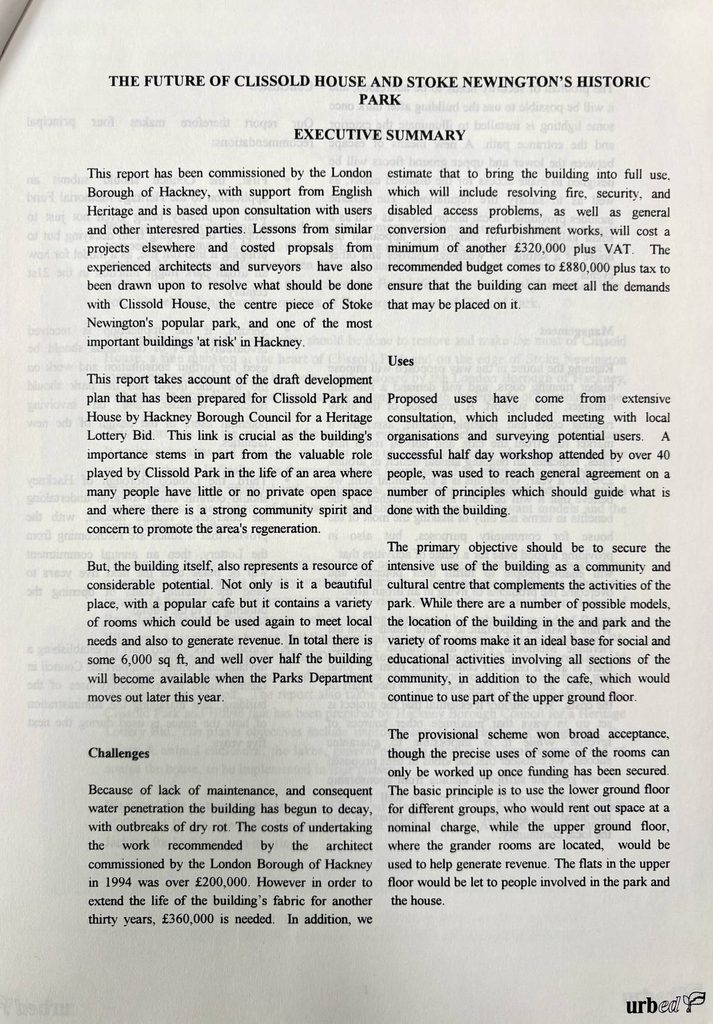
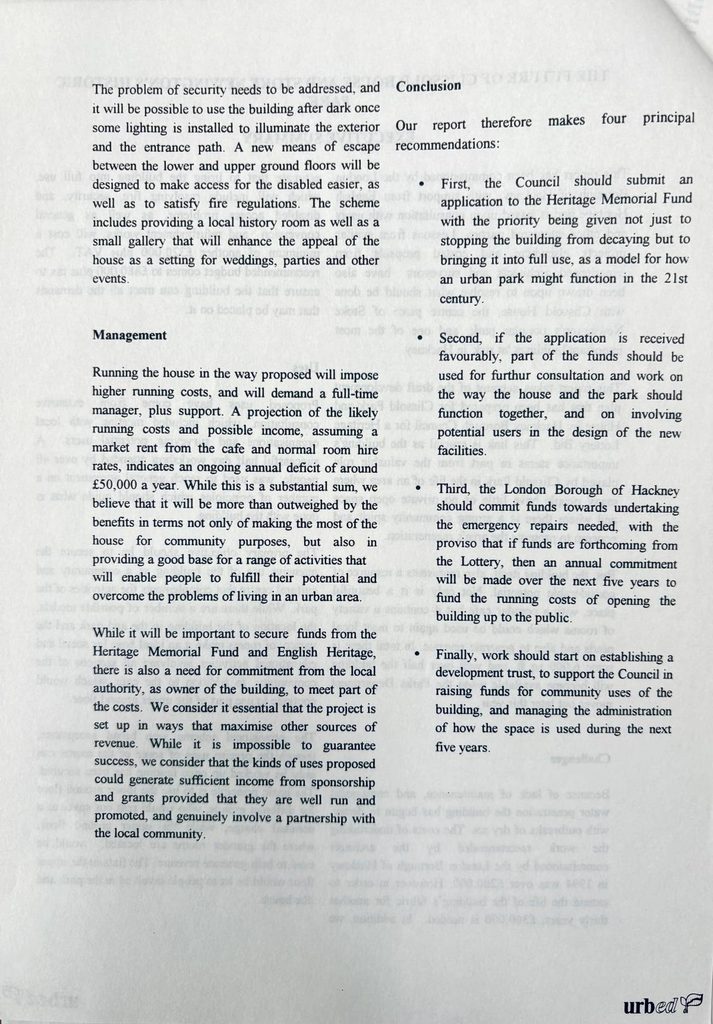
The challenge did not end with finding the money for restoration. The study estimated that the House could still face an annual deficit of around £50,000 and recommended continuing financial support from the Council. The campaign therefore had to address not only how Clissold House could be repaired, but what it would be used for, who would run it and how it could remain financially sustainable.
During 1996, work began on creating a dedicated organisation capable of helping to take these ambitions forward. This would lead to the establishment of the Clissold House Trust later that year.
The first Lottery bids
In 1996, the campaign entered another phase as efforts to create a dedicated organisation for Clissold House and secure major restoration funding progressed.
The Clissold House Trust was established later that year as a new organisation intended to help take forward proposals for the House. Some of the people involved in the Friends of Clissold House also became involved in the Trust, but the surviving records do not show that the Friends simply became the Trust. CPUG and the Trust would continue to have distinct roles in the restoration process.
At the same time, Hackney Council was developing a much wider Lottery application covering both Clissold House and the park. CPUG sought to ensure that park users could influence the proposals. On 3 September 1996 it organised a special meeting with Council officers to discuss the emerging application, two days before a separate Council public consultation meeting.
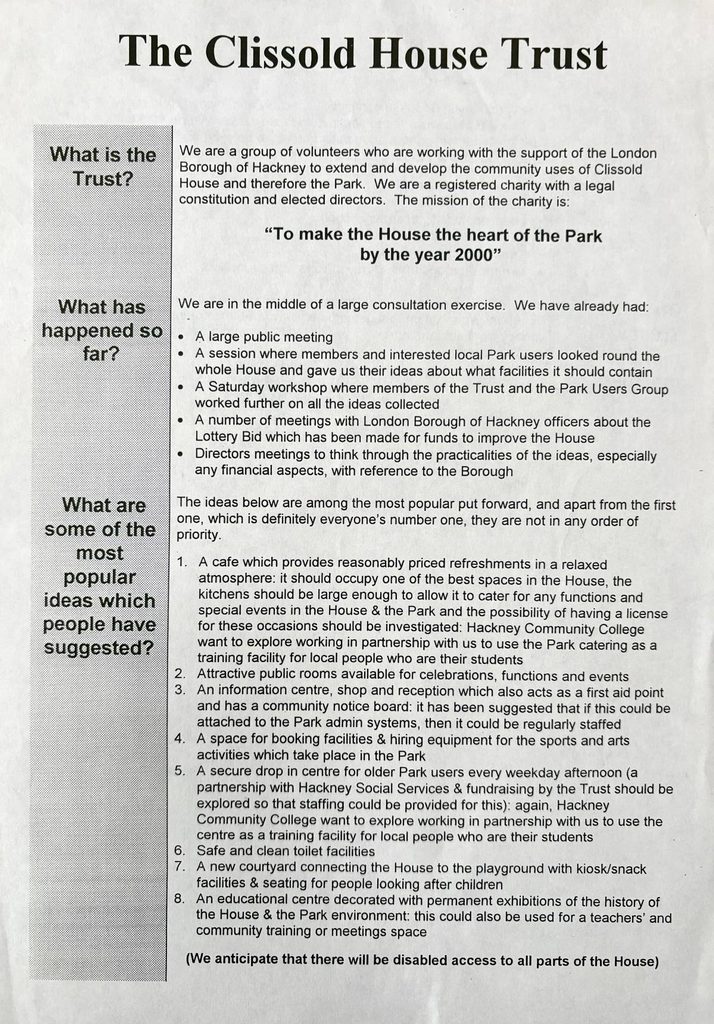
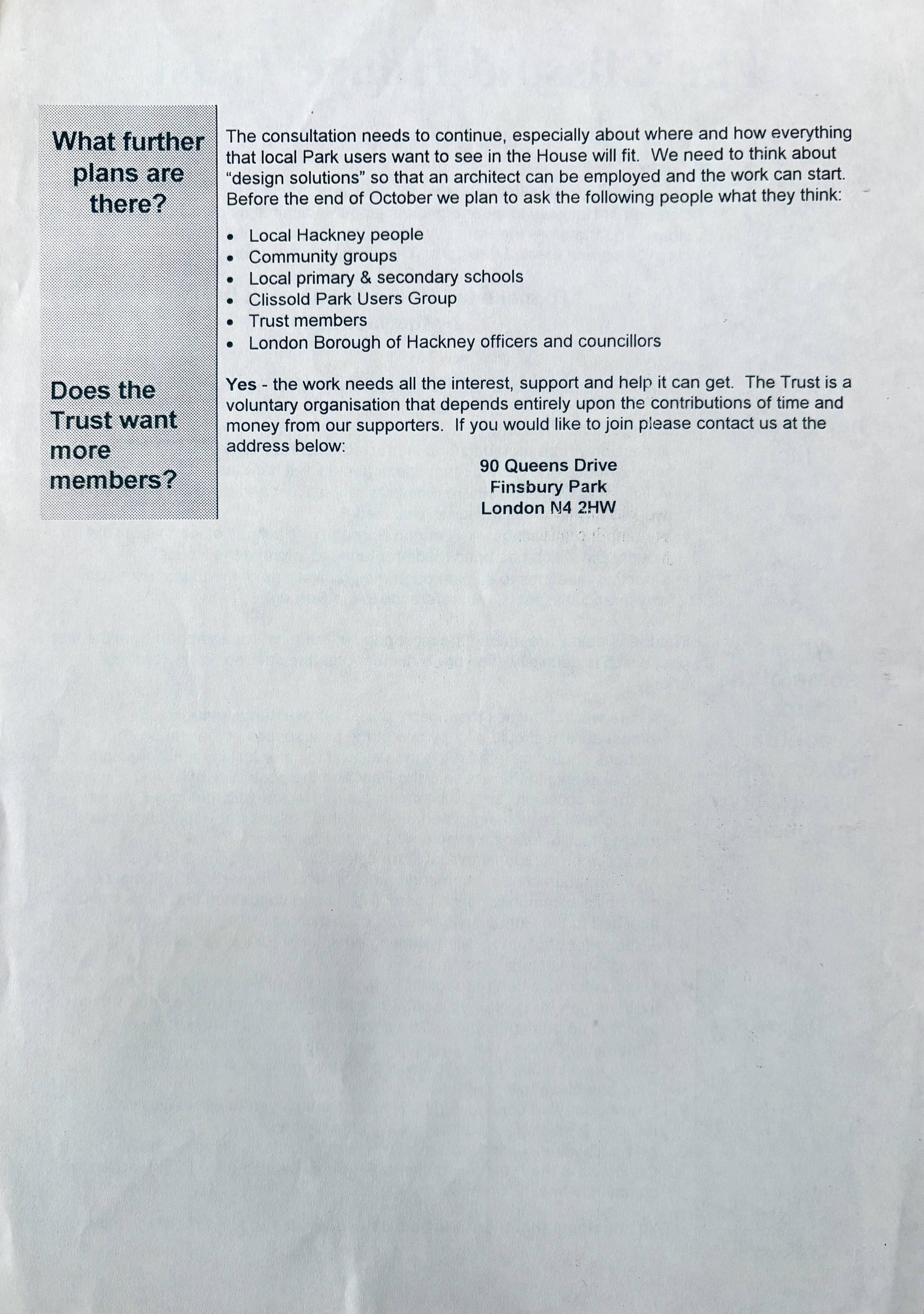
The Lottery bid and masterplan were submitted on 30 September 1996. The proposals addressed not only the House but the wider park, including its landscape, water features, animals, recreation and long-term maintenance.
The application did not lead directly to a restoration award. By 1998, the Trust reported that Lottery assessors had asked for the proposals to be revisited because of problems with the scheme. New consultants were appointed, with CPUG, the Clissold House Trust and Hackney Council separately represented in the process of developing revised proposals.
Meanwhile, the Trust continued trying to establish a viable future for Clissold House. It held public meetings, organised visits and workshops and consulted potential users. By March 1998 it reported that it had contacted 17 community groups and had grown to more than 200 members.
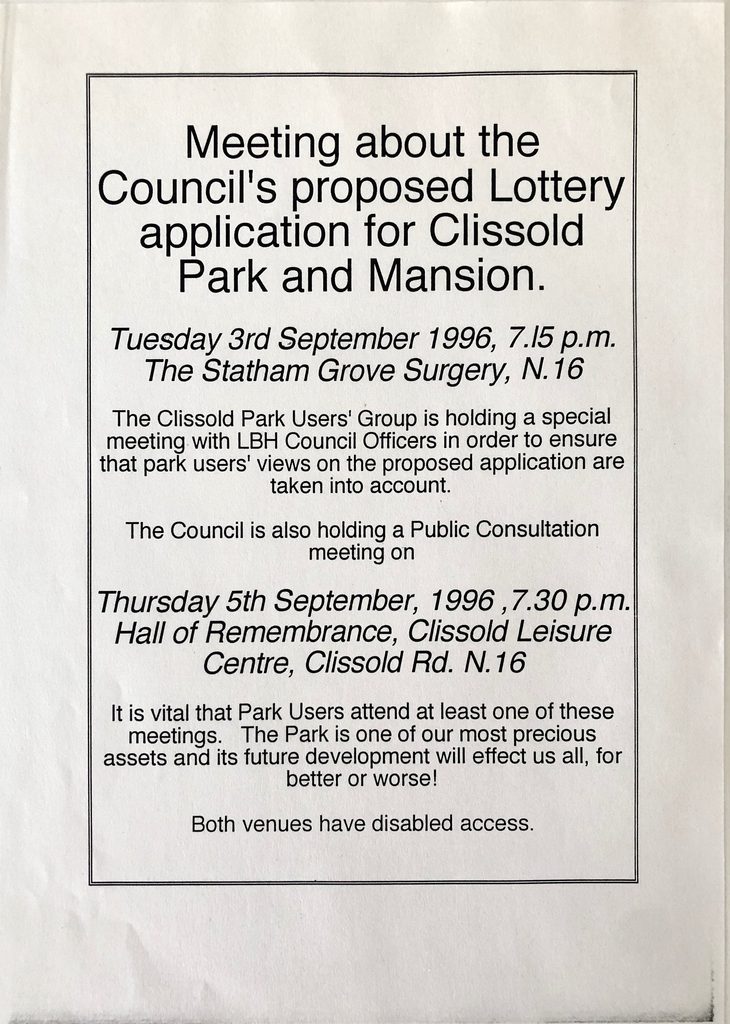
Yet substantial obstacles remained. The Trust still had no formally agreed lease for Clissold House and had not taken over management of the building. The campaign had succeeded in building considerable community involvement without yet finding a workable route to restoration.
By early 1999, discussions had moved towards a proposed Shadow Partnership Board, bringing together three representatives from CPUG, three from the Clissold House Trust and four Hackney councillors. Its intended purpose was to help steer a unified Lottery bid for the House and park. The surviving papers show agreement to the proposal from some of those involved, but not that the board ultimately came into operation or that the intended bid was submitted.
The 1990s therefore ended with the future of Clissold House still unresolved. A decade of campaigning had produced feasibility studies, extensive consultation, new organisations and successive attempts to secure funding, but the House had still not been restored.
The people behind the campaign
The surviving records show how much the long campaign depended on the sustained work of local volunteers.
During the 1990s, people including Christine Disney, Larraine Worpole, Patricia Crossley and Jonathan Shattock appear repeatedly in meetings, correspondence, consultation and research connected with Clissold House. Their work included organising public meetings, developing ideas for the House, responding to Council proposals, researching possible forms of management and trying to ensure that park users were represented as plans developed.
Leadership also changed over this period. Christine Disney is recorded as chair of the User Group in 1989, while Larraine Worpole was chair by from 1994 till 1997. The surviving papers do not provide a complete record of when these changes took place, but they reveal a campaign sustained by different people over many years rather than the work of a single individual.
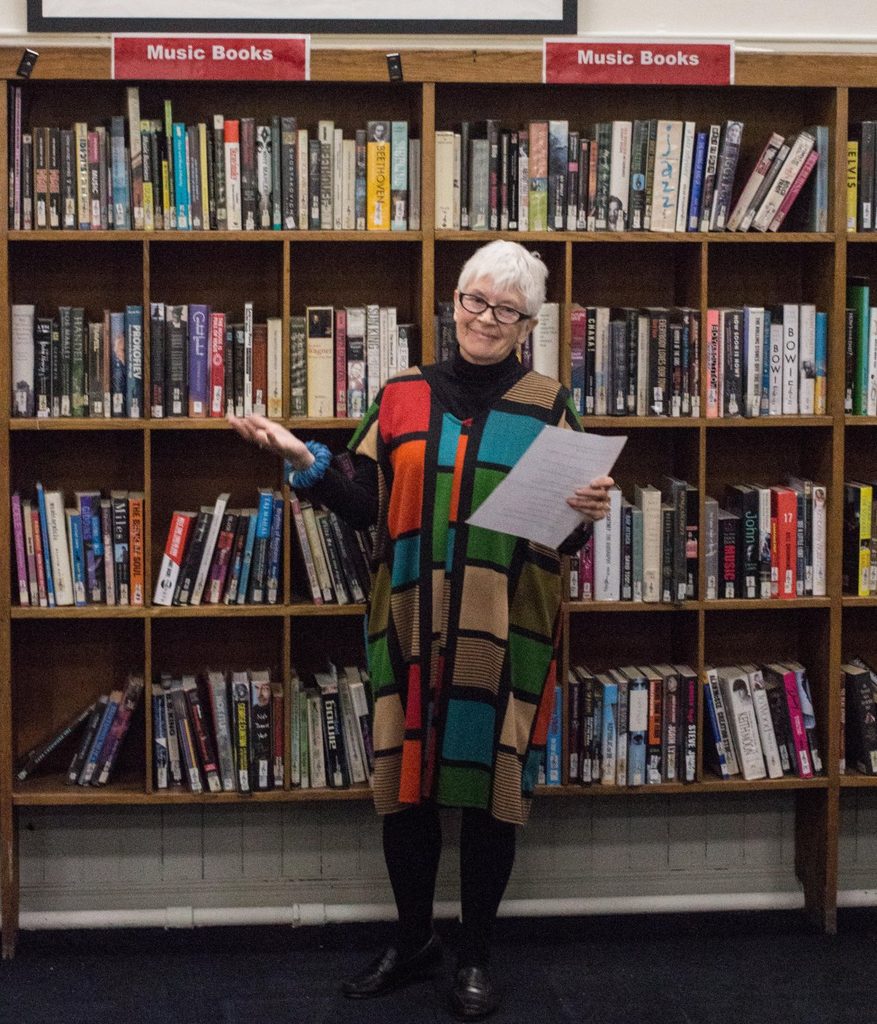
Another important figure in CPUG’s longer campaign was Ken Worpole, a former chair of the User Group who is now its Honorary President. Ken was closely involved in later efforts to secure the restoration of Clissold House and the park, working with Hackney Council as successive proposals were developed. His role included helping to develop and write proposals for restoration funding and continuing to work towards a viable scheme through unsuccessful attempts before the eventual Lottery-funded project emerged.
Speaking to CPUG’s Park History Representative in September 2026, Johnny Hudson, a CPUG member since 1995 who was involved in the restoration campaign, recalled:
“For over ten years the Group kept on at the Council for renovation of the house and to gain a successful lottery grant.”
For four of those years Johnny was also a Hackney councillor, giving him experience of the process from both the User Group and Council perspectives.
By the time the eventual restoration was completed, those involved saw it as the culmination of a campaign stretching back decades. At the reopening, then CPUG chair Caroline Millar recalled:
“Local people have campaigned for decades to save the house and help secure funding for its restoration.”
She also described CPUG’s longstanding ambition for Clissold House to become the “heart of the park” and a hub for activity there.
Developing a restoration plan
The proposals of the 1990s did not lead directly to the restoration eventually completed in 2011–12. The surviving records do, however, show that efforts to secure major investment in Clissold House and the park continued into the new century.
By 2002, CPUG was again discussing proposals for restoring Clissold House and the park and commenting on a further funding bid. The group’s concerns extended beyond the condition of the House itself to how the park would work for the people using it.
Over the following years CPUG continued to discuss restoration proposals with Hackney Council. Its records show recurring interest in the future management and use of Clissold House, facilities for children and young people, accessibility, trees and landscape, animals, water features and the way the park would be managed as a whole.
The process was not straightforward. Funding proposals changed and not every attempt succeeded. The work of the 2000s should therefore be seen as a continuation of the long effort to secure the future of the House and park, rather than the straightforward implementation of the schemes developed during the 1990s.
In 2005, renewed work began on developing a major restoration scheme, with CPUG represented on the Project Reference Group. This provided a formal route for park users and community interests to contribute as proposals developed.
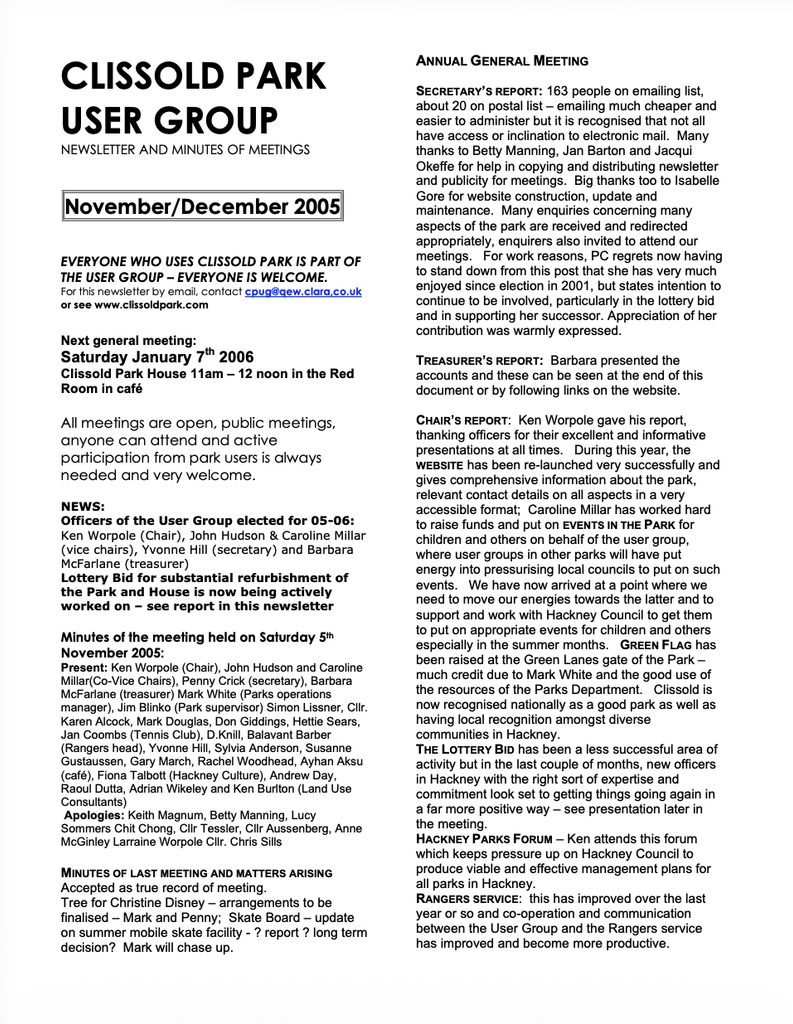
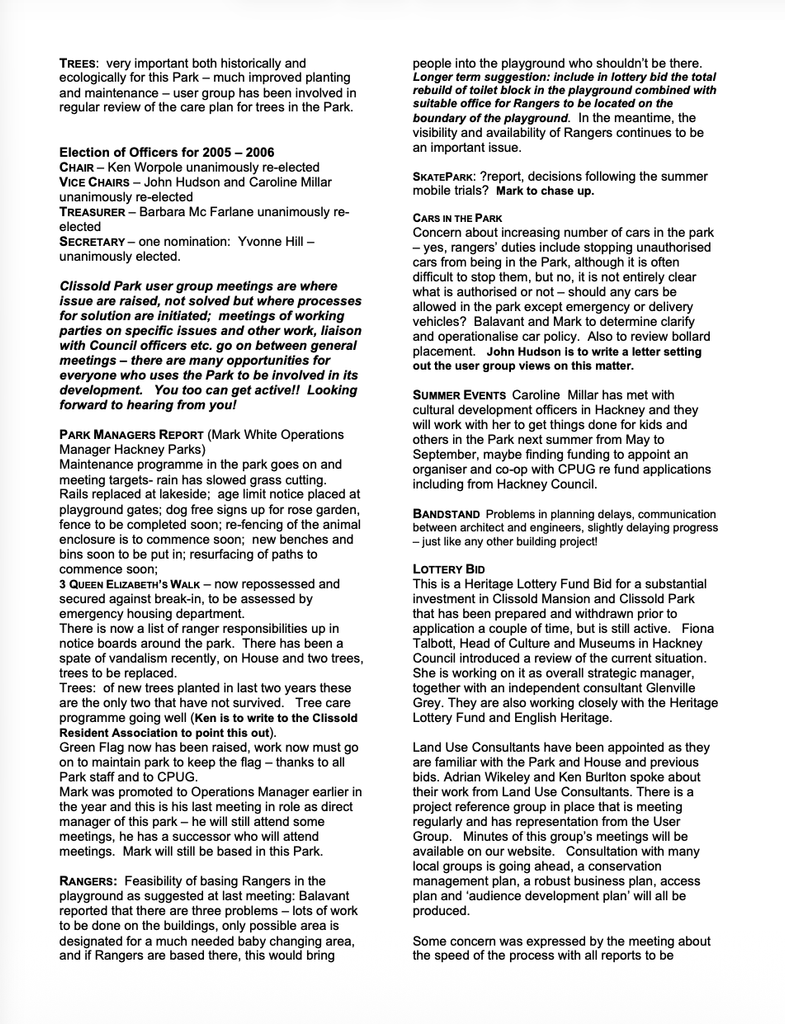
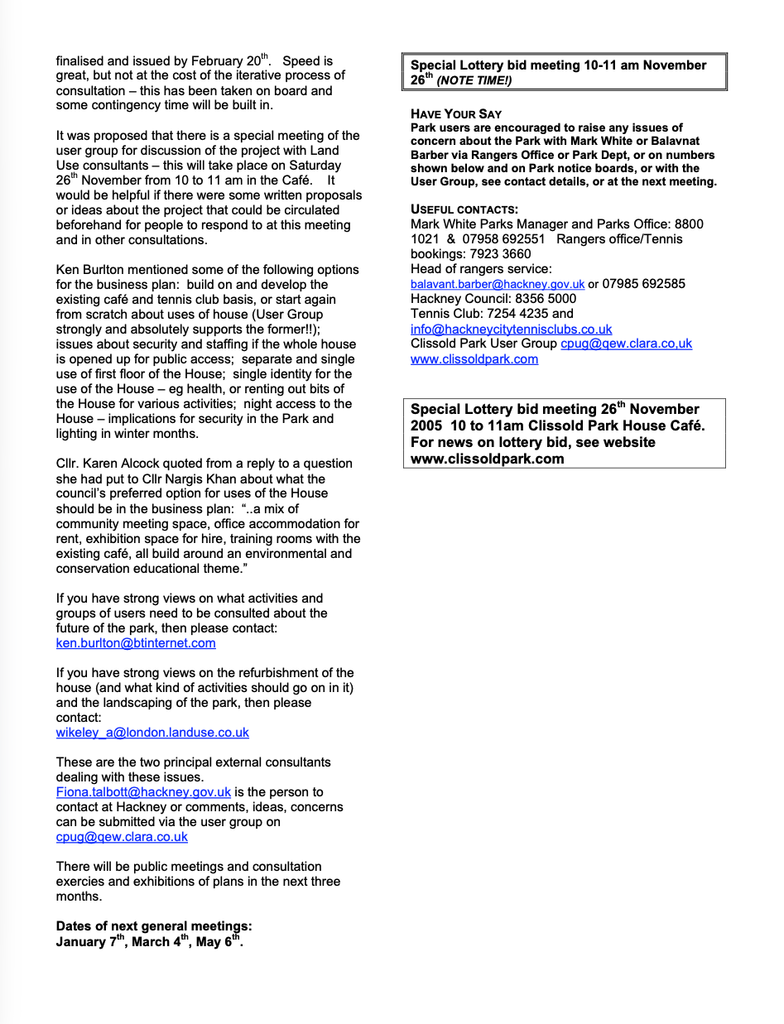
In 2006, work on the Heritage Lottery Fund bid was suspended while an alternative proposal involving a fire museum at Clissold House was considered. CPUG expressed its disappointment and continued pressing for a comprehensive approach to restoring both the House and park.
When work on the Lottery project resumed, CPUG remained involved as the proposals moved towards a formal funding application.
From campaigning to a funded project
A major step forward came in 2007, when the Heritage Lottery Fund and Big Lottery Fund gave the project a Stage One pass and awarded Hackney Council development funding.
This did not yet fund the restoration itself. The development grant allowed the Council and its partners to develop the proposals, undertake further consultation and prepare the detailed plans required for the much larger capital funding application.
After years of earlier proposals and attempts to secure funding, this represented an important breakthrough. For CPUG, it meant that the long-running effort to restore Clissold House and the park was moving towards a deliverable project, but important decisions about what that project would contain were still being made.
CPUG continued to participate in the Project Reference Group and scrutinise the emerging plans. Following the Stage One decision, the group organised a special meeting on 18 April 2007 attended by more than 60 park users. The discussion covered Clissold House, trees and landscaping, water features, facilities for children and young people, accessibility, consultation and the future management of the park.
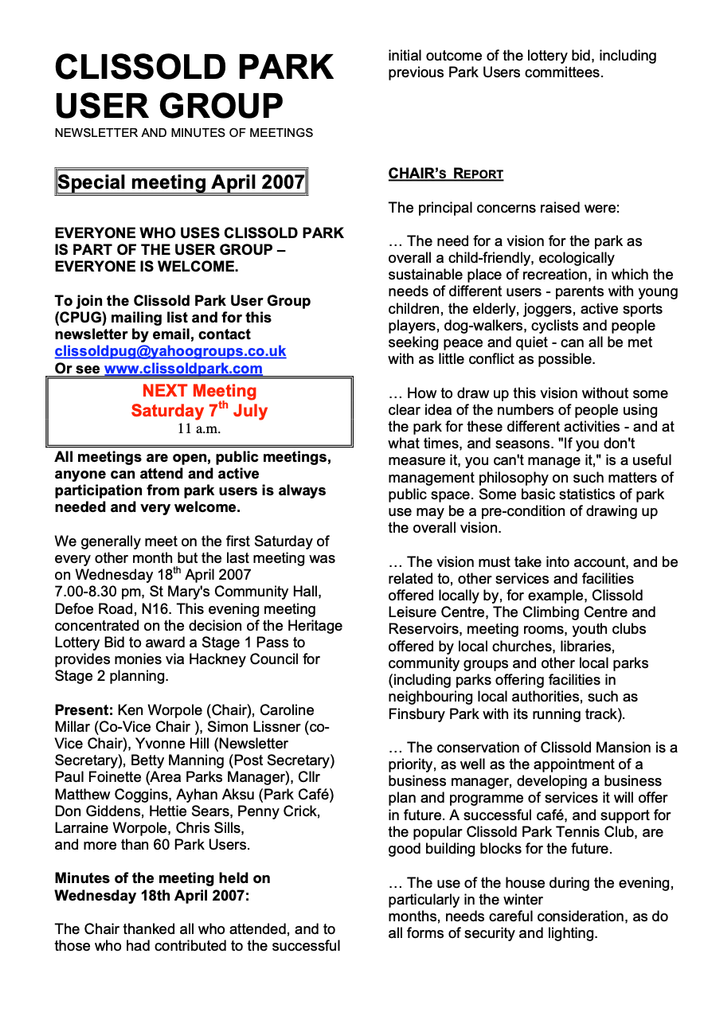
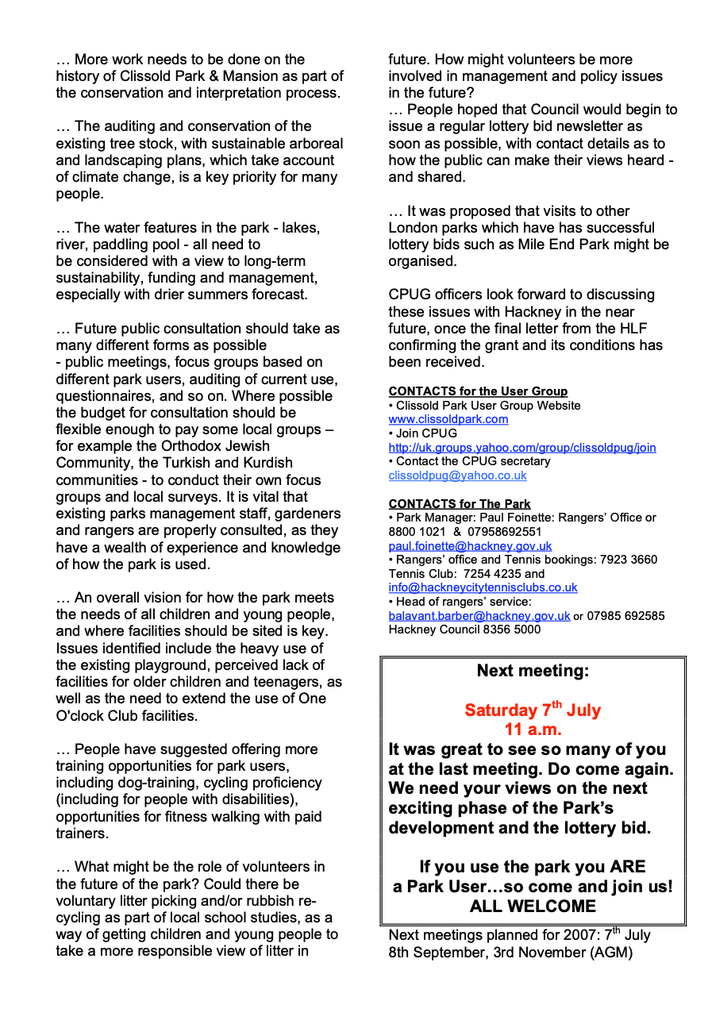
The User Group did not simply support every proposal put forward. Its records show members questioning aspects of the emerging scheme, seeking changes and pressing for meaningful consultation with the people who used the park.
As the project moved into its next stage, CPUG’s role increasingly involved balancing support for the major investment that the park badly needed with scrutiny of the detailed proposals through which that investment would be delivered.
Shaping the plans with park users
Community consultation formed a substantial part of developing the restoration project.
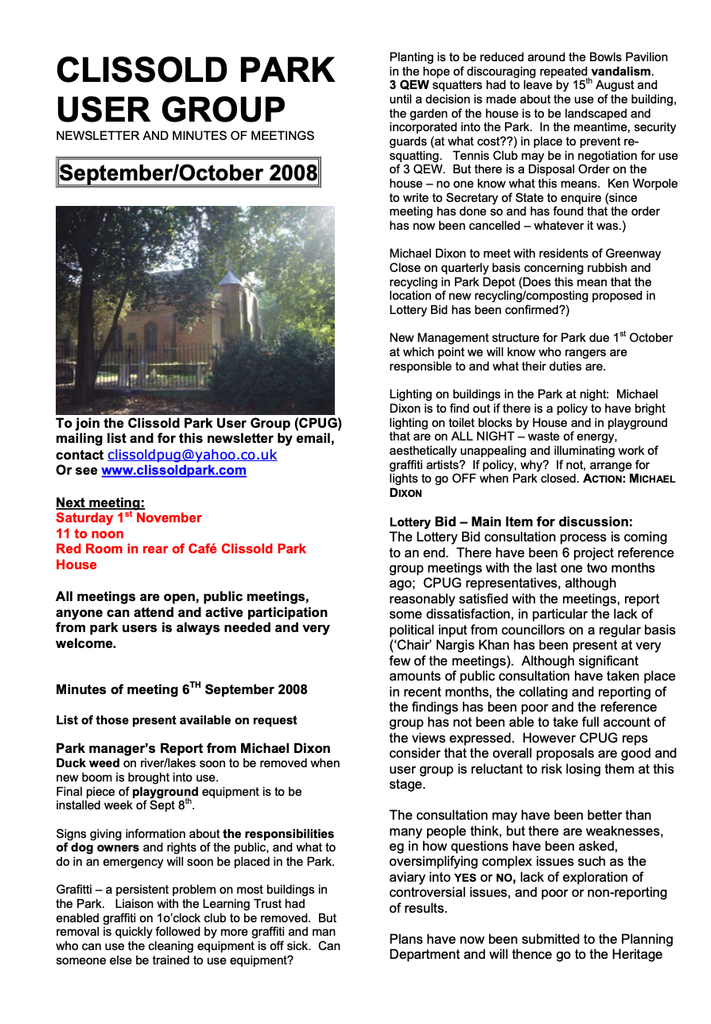
An initial public consultation took place in 2006, followed by a much larger programme as the detailed plans developed in 2008. This included staffed exhibitions, tours of Clissold House, workshops, presentations, meetings, a schools survey, questionnaires and online consultation.
More than 230 questionnaires had been returned and analysed by August 2008.
People were asked about proposals including the future use of Clissold House, children’s play, sports facilities, the New River landscape and the animal enclosures.
The consultation made a demonstrable difference to aspects of the plans. Strong support was recorded for a café terrace on the south side of Clissold House. A proposed sunken wheels park was moved further into the park following concerns about noise. Plans to remove the aviary were reconsidered after people argued for its retention, while proposals to remove railings around the lakes were abandoned following concerns about child and wildlife safety.
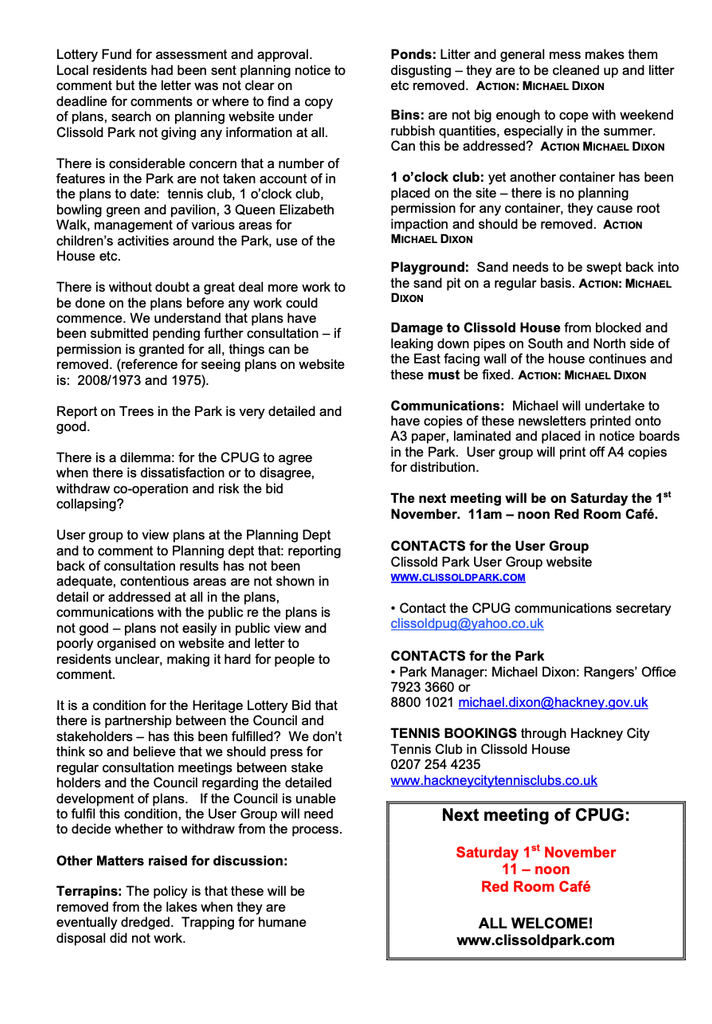
CPUG continued to raise its own concerns about the proposals. In 2008, for example, the group challenged unsuitable replacement playground equipment and pressed for further consultation and remedial work. The final equipment was subsequently reported as installed later that year.
The group also raised questions about the New River water feature, trees, the layout of play facilities, buildings excluded from the project and the quality of consultation.
CPUG’s records from September 2008 illustrate the sometimes difficult position the group occupied. Its representatives considered the overall restoration proposals good, but remained dissatisfied with aspects of the consultation process, including how people’s responses had been collated and reported. Members discussed whether to support the scheme despite those concerns or risk weakening a funding bid that could bring much-needed investment to the park.
Johnny Hudson remembers one of the principles CPUG particularly supported being that the park landscape should remain “open, uncluttered”, without unnecessary additional buildings.
Looking back on the process, he believes CPUG’s involvement made a real difference:
“I think it was very effective. If you looked at the sort of things we were lobbying for, most of it was taken.”
When the restoration was completed, Hackney Council similarly acknowledged the relationship, describing CPUG’s input as “invaluable”.
Supporting the final bid
As the project approached its final funding application, CPUG considered whether it could support the scheme as a whole.
By early 2009, the group had sent a letter giving conditional support to the restoration bid. CPUG supported the overall objective of securing major investment for Clissold House and the park while continuing to raise concerns about aspects of the proposals and the way the restored park would operate.
This reflected the approach the group had taken throughout the development of the project. CPUG wanted the funding bid to succeed, but did not regard support for restoration as requiring unquestioning support for every element of the scheme.
The funding application was successful. In 2009 the project received the approval that allowed the major restoration works to proceed.
The Heritage Lottery Fund and Big Lottery Fund ultimately awarded £4.46 million, while Hackney Council invested around £4.1 million. Contemporary sources generally describe the complete project as costing £8.9 million.
After years of campaigning, unsuccessful attempts to secure funding, consultation and planning, the restoration could finally go ahead.
Preparing for the restoration works
With the funding secured, attention turned to preparing for major construction work in a park that needed to remain usable by the public throughout much of the project.
From autumn 2009, CPUG participated in the project’s Stakeholder Forum alongside other local organisations. This provided a route for community representatives to receive updates about the developing works and raise concerns about their impact on park users.
One example was the paddling pool. Plans initially envisaged its closure during summer 2010 because of the restoration works. CPUG challenged this, arguing that losing such an important children’s facility for an entire summer would have a significant impact on families using the park.
By January 2010, the plans had been changed so that the paddling pool could remain open for the summer. CPUG’s newsletter explicitly recorded that the change had been made following concerns raised by the User Group.
CPUG also continued to discuss access, temporary facilities, the café, animals and other practical consequences of undertaking major construction work in a heavily used public park.
The move from planning to construction therefore did not end the User Group’s involvement. Its role increasingly shifted towards scrutinising how the project would be carried out and representing the interests of people continuing to use the park while the works took place.
Work begins
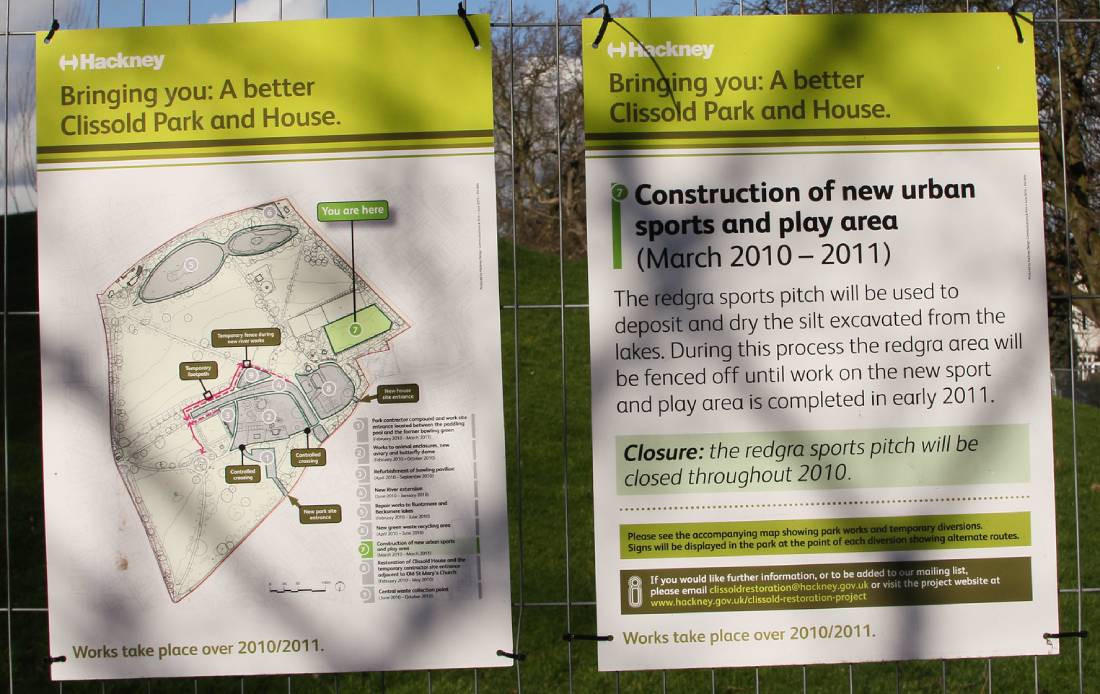
The major construction programme began in 2010 and continued through 2011.
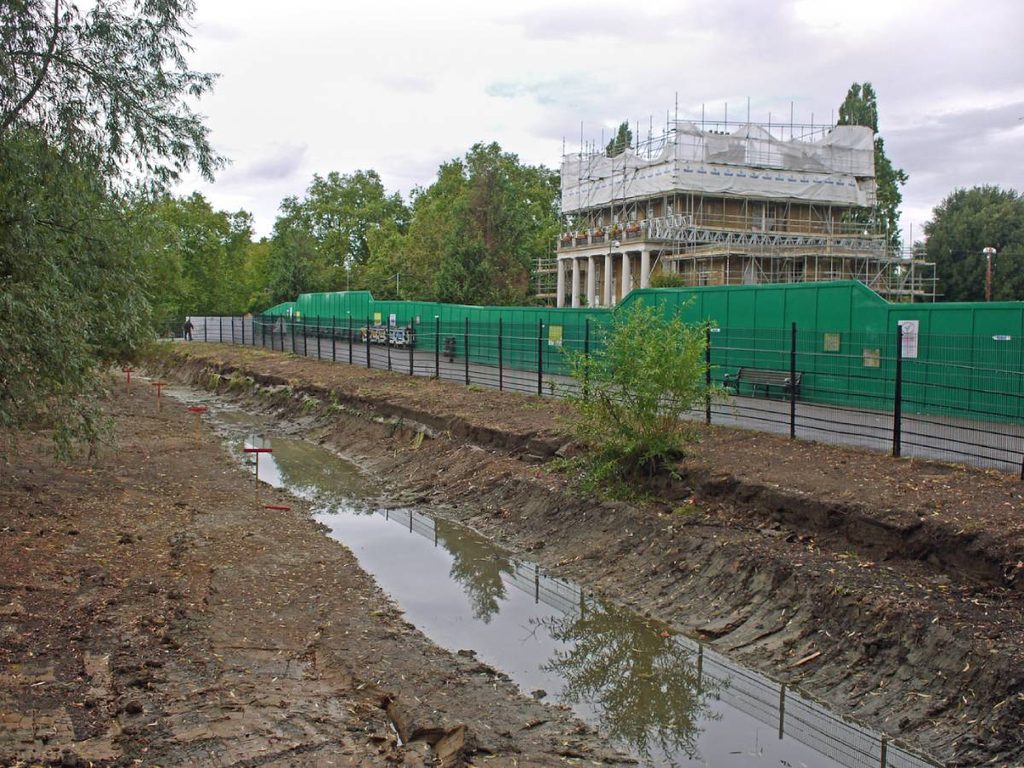
Separate contracts covered the restoration of Clissold House and the works in the wider park, with Mansell responsible for the House and Osborne for the park. The project included restoration of the historic landscape and water features alongside improvements to buildings, paths, play and sports facilities, animal enclosures and other park infrastructure.
For CPUG, the start of construction marked another change in its role. After years of campaigning, consultation and scrutiny of the plans, the group continued to represent park users as those plans were put into practice.
This included raising concerns about access, the management of construction work and the welfare of the park’s animals. Following deaths and other incidents involving the deer during the works, CPUG sought information about what had happened, raised questions about veterinary care and pressed for appropriate measures to protect the animals.
The group also continued to follow issues including accessibility and the arrangements being developed for managing Clissold House and the park once the restoration was complete.
Restoring Clissold House
The restoration brought much more of Clissold House into active public use after decades of uncertainty about its future.
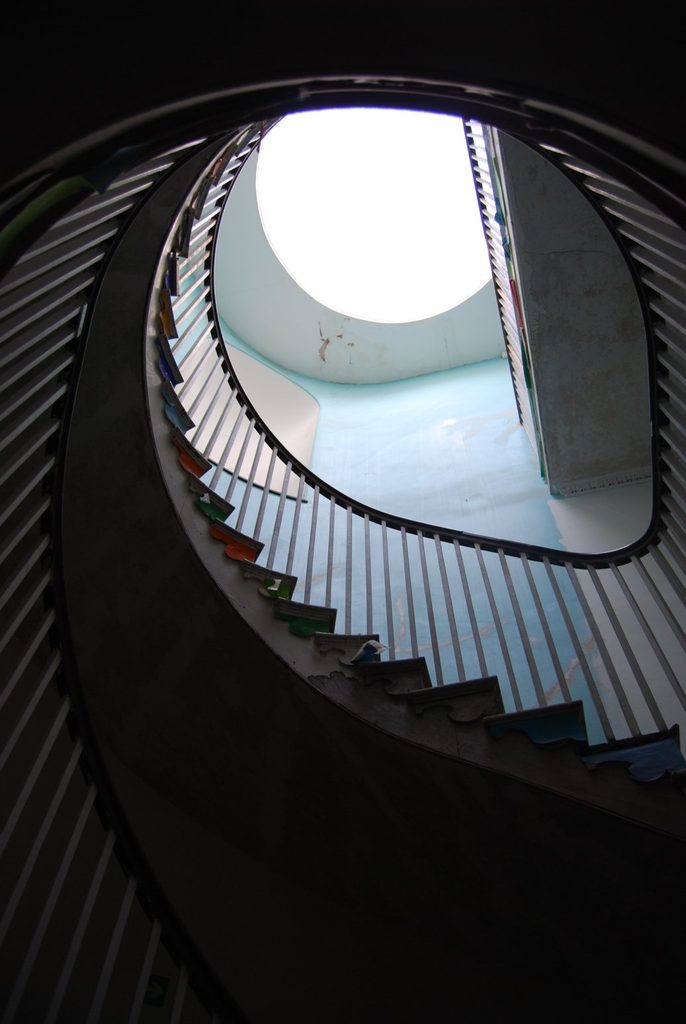
Historic features including cornicing, fireplaces and the central skylight were restored, while modern services and facilities were introduced so that the building could function as a café, events venue and community space. Five function rooms were created, and the café was given a terrace overlooking the park.
An important principle of the scheme was that the whole House should be accessible to the public. CPUG strongly supported this principle, but, as Johnny Hudson has clarified, it was not simply a User Group request: public access throughout the House became one of the design requirements of the Lottery-funded project.
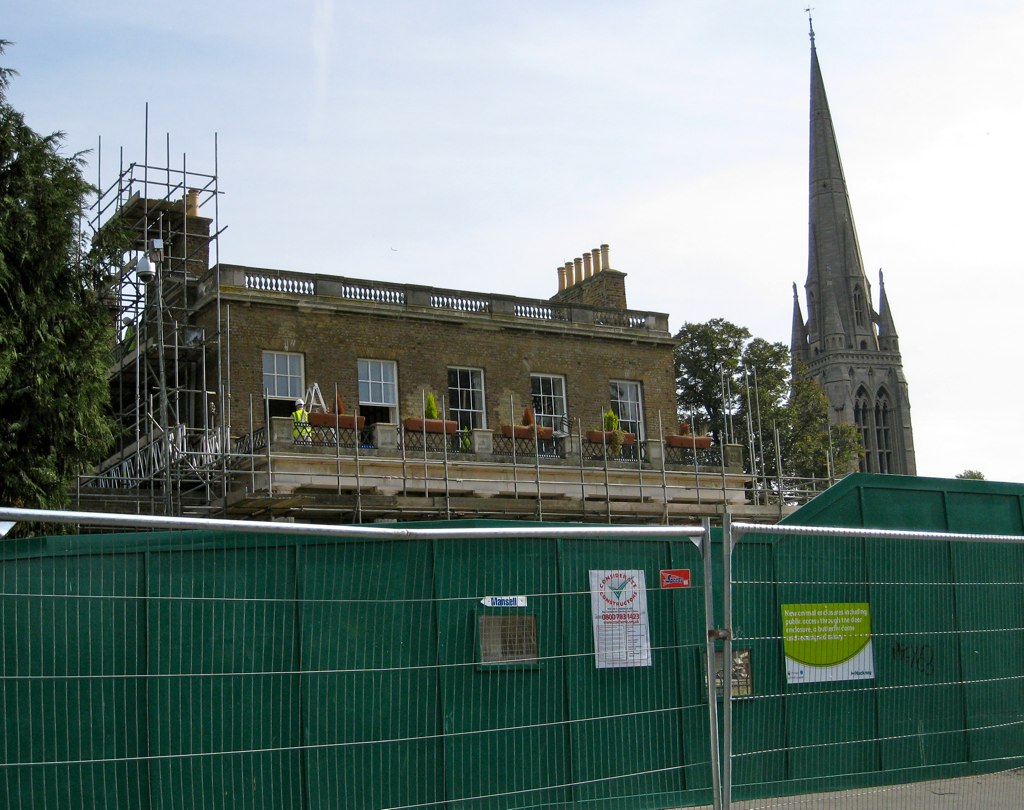
The completed restoration also realised an ambition that can be traced much further back through the surviving campaign records. In 1995, the Friends of Clissold House described one of their aims as making the House the “heart of the park”. More than 16 years later, as the restored building prepared to reopen, then CPUG chair Caroline Millar used the same phrase to describe the User Group’s longstanding vision for its future.
The restoration therefore did more than repair an important historic building. It gave Clissold House a much greater public and community role within the park.
Restoring and improving the park
The project extended across the surrounding landscape.
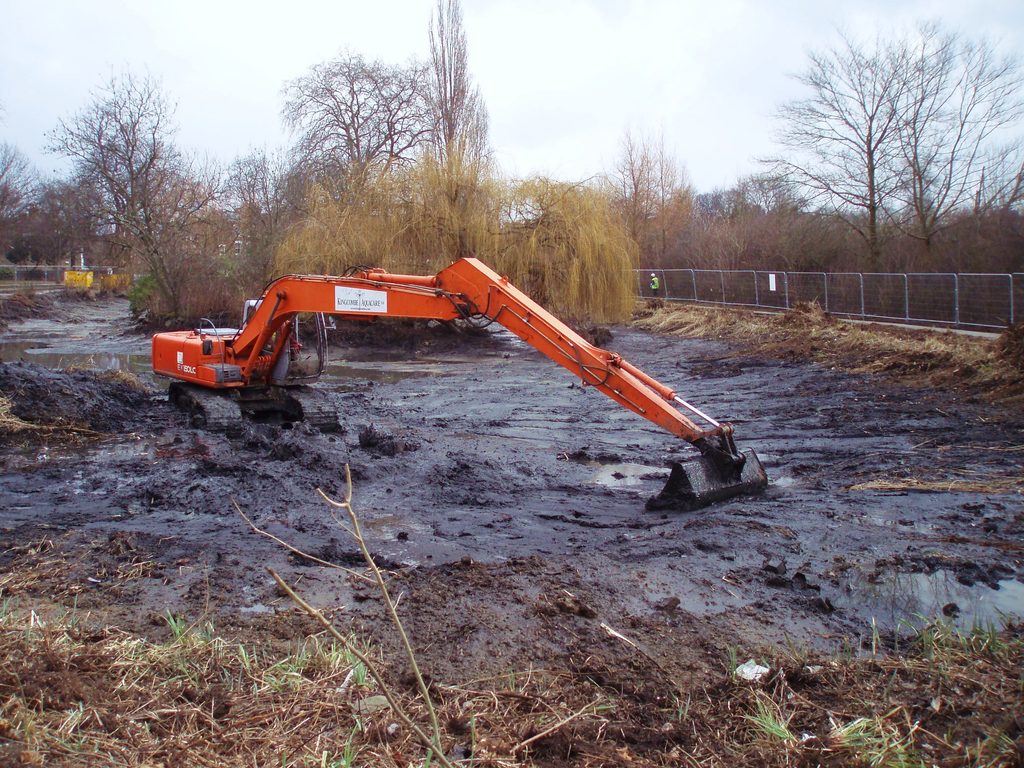
The two lakes underwent landscaping, desilting and structural improvements, alongside tree and shrub planting. Work was also carried out around the surviving section of the New River and at its western end towards Green Lanes.
Contemporary consultation material described one proposal as an “extension” of the New River. This did not mean restoring the historic watercourse through the park towards Church Street. At the western end, beyond the bridge, the former course was instead reflected in a landscaped treatment using gravel and large rocks to suggest the continuation of a riverbed.
Johnny Hudson remembers the intention behind this feature:
“That was a design feature, just to echo what had been there.”
The distinction is important because the New River was shortened in 1946 to terminate at the East Reservoir. The crescent-shaped pond opposite Clissold House also follows part of its former course, but it is a separate water feature and is not connected to the functioning New River.
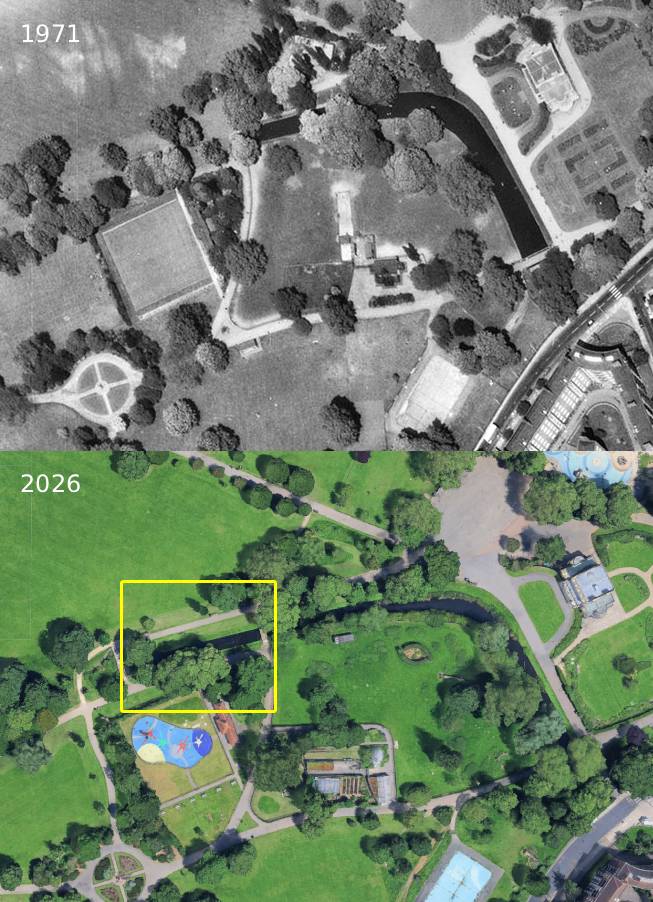
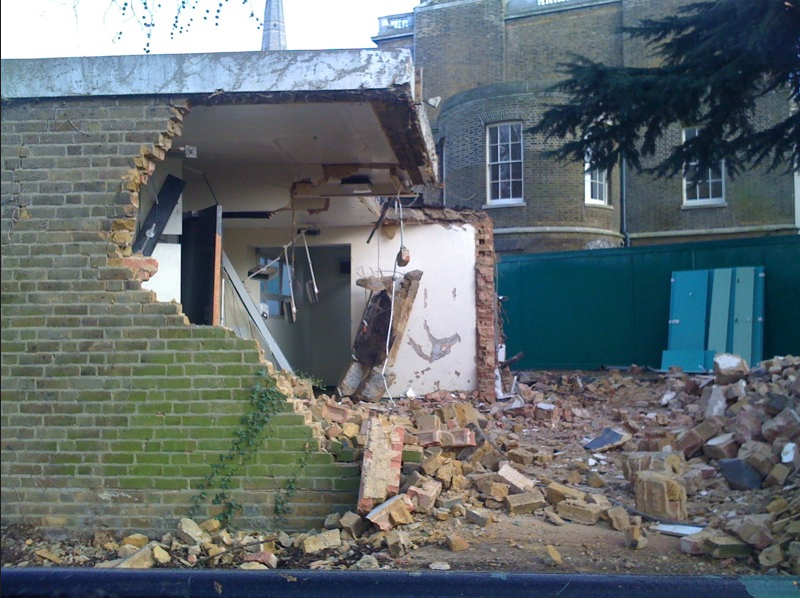
Other work included new and renovated animal and bird enclosures, landscaping around the animal area and improvements to the former Bowling Pavilion to provide education and community facilities. Biodiversity was also incorporated into the restoration programme.
New recreational facilities included a children’s play area, a sunken wheels park for skating and BMX use, a multi-use games area for basketball and five-a-side football, and table tennis. New signage was installed across the park.
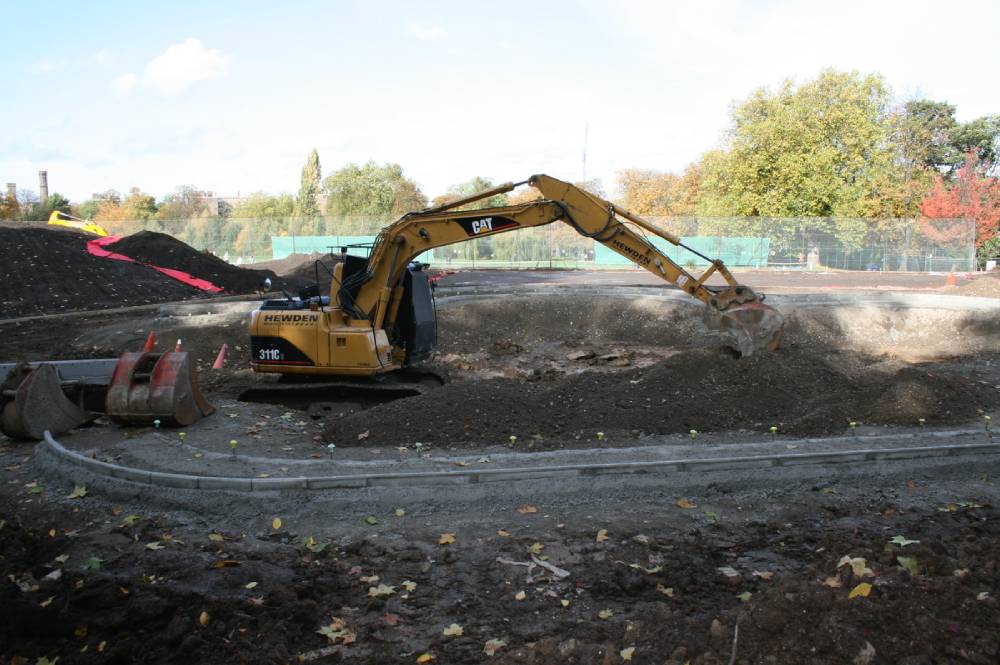
The playground illustrates the community involvement in the project particularly well. When it opened in 2011, Caroline Millar highlighted the involvement of children and parents in its design and the resulting range of facilities for different age groups.
A new approach to managing the park and House
CPUG had argued that the restored park and House needed to be managed as a whole rather than as separate facilities.
The group’s records describe several years of pressing Hackney Council for a single senior management role with responsibility across Clissold Park and Clissold House.
In late 2011, the Council reported that consultation with CPUG had contributed to strengthening the proposed management arrangements. A senior role covering both the park and House was subsequently established.
This was important because the restoration was not simply about new buildings and facilities. Their long-term success would depend on how the whole park was managed after the capital project ended.
Clissold House reopens
The major restoration works were largely completed during 2011. The final major milestone came when Clissold House reopened to the public on 3 January 2012 after around 18 months of intensive renovation.
For CPUG, the reopening represented the achievement of something the group and other local campaigners had pursued over many years.
Caroline Millar welcomed the reopening by saying:
“It is a real pleasure to see this beautiful house come back into public use.”
Hackney Council also acknowledged CPUG’s contribution, describing the group’s input into the project as “invaluable”.
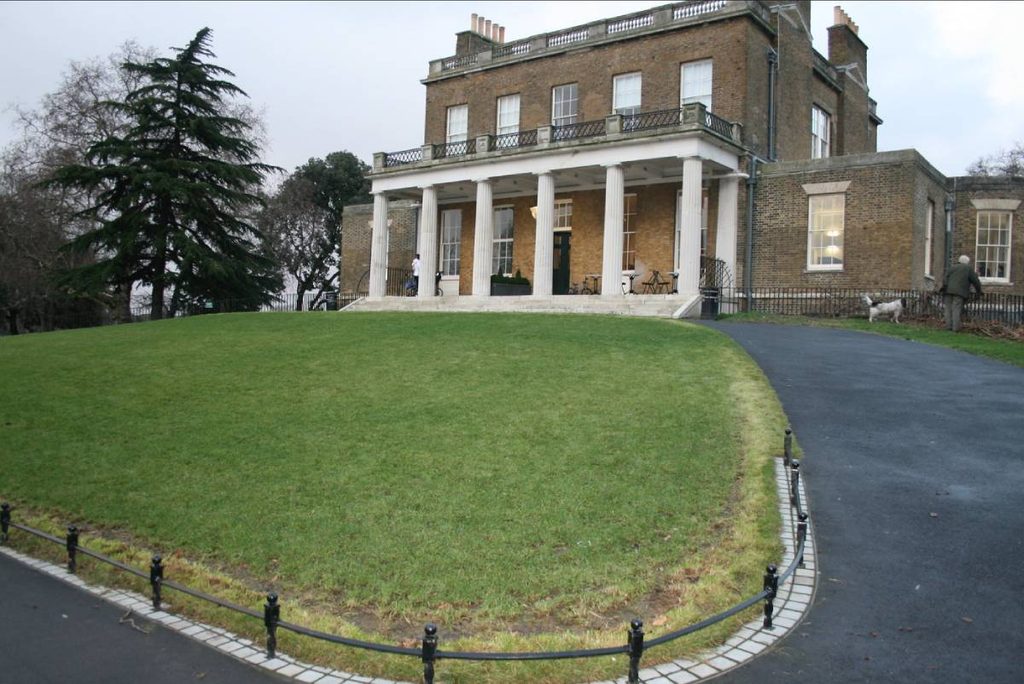
There was another important indication of the transformation that year. Having been on the national Buildings at Risk Register since 1991, Clissold House was removed from the Heritage at Risk Register in 2012 following the restoration.
English Heritage’s 2012 report recorded that following the Lottery-funded repair programme the Grade II* House “has at last been removed from the Heritage at Risk Register”.
More than twenty years after the building had formally been identified as at risk, its future had been secure
The work continued after reopening
Completion of the construction project did not mean that CPUG’s involvement ended.
Within weeks of Clissold House reopening, the group was gathering concerns from park users about how the new facilities worked in practice.
In February 2012 CPUG wrote formally to Hackney Council raising issues including public access within the House, signage, the east entrance and lift, toilets, community use, the café menu and prices, the kiosk and other refreshment provision.
The Council responded in March. It agreed that further work was needed on the east entrance and signage, confirmed changes to toilet signage and access arrangements, and reported that the café operator was revising its menu and service.
This correspondence illustrates an important part of CPUG’s role during and after the restoration. The group was not responsible for managing Clissold House or delivering Council services. It provided a route through which the experiences and concerns of people using the newly restored park could be raised with those responsible.
A restoration with a lasting legacy
The restoration fundamentally changed the condition and use of Clissold House and many of the park’s facilities.
It secured the future of a Grade II* listed building that had been at risk since 1991 and brought much more of the House into public use. It also left much of the infrastructure familiar to park users today: the restored House and café, function and community spaces, playground, wheels park, games area, improved water features and landscape, animal facilities and education space.
The project is also an important chapter in CPUG’s own history. Surviving records now allow that story to be traced from discussions about the future of Clissold House in 1989, through the work of the Friends of Clissold House, the establishment of the separate Clissold House Trust, feasibility studies, public consultation and attempts to secure Lottery funding during the 1990s, and into renewed efforts to develop a successful restoration project during the following decade.
The archive also reveals how much of this work depended on local volunteers. Over many years they organised meetings, researched possible uses for the House, examined different ways it might be managed, contributed to consultations, represented park users and kept pressing for investment. Progress was rarely straightforward: proposals were revised, funding remained uncertain and different organisational approaches were explored before a viable project was eventually secured.
CPUG’s contribution therefore cannot be reduced to a single campaign or funding bid. Over more than two decades, the group helped keep the future of Clissold House and the park on the agenda. As different proposals developed, it sought public involvement, participated in formal consultation structures, challenged aspects of the plans and supported efforts to secure the investment required.
The £8.9 million restoration itself was led by Hackney Council and funded by the Council and Lottery bodies. Its successful completion was a shared achievement involving many organisations and individuals.
For CPUG, it demonstrated a role the group continues to perform today: bringing together people who use and care about Clissold Park, representing their views and working with those responsible for the park to help shape its future.
Sources and acknowledgements
This account draws on surviving CPUG records, newsletters and meeting minutes, Hackney Council material, Lottery funding records and other historical sources, together with first-hand recollections.
Particular thanks are due to Penny Crick, CPUG’s secretary in the early 2000s, who in 2016 gave CPUG’s current Park History Representative, Amir Dotan, around 70 documents relating to CPUG, the Friends of Clissold House and the Clissold House Trust during the 1990s. This important collection has made it possible to reconstruct the early restoration campaign in considerable detail.
Thanks are also due to Johnny Hudson, a CPUG member since 1995 and later a Hackney councillor, for sharing his memories of the long restoration campaign and CPUG’s involvement; and to Caroline Richards, who worked as a park keeper at Clissold Park with responsibility for the park’s animals and lived in Clissold House from around 1986 until 1999, for sharing her memories of the House and CPUG’s earlier years.